
Virtual reality for trade shows and events
VR at Your Booth: Let Visitors Try Your Product, Even If It Could Not Come Along
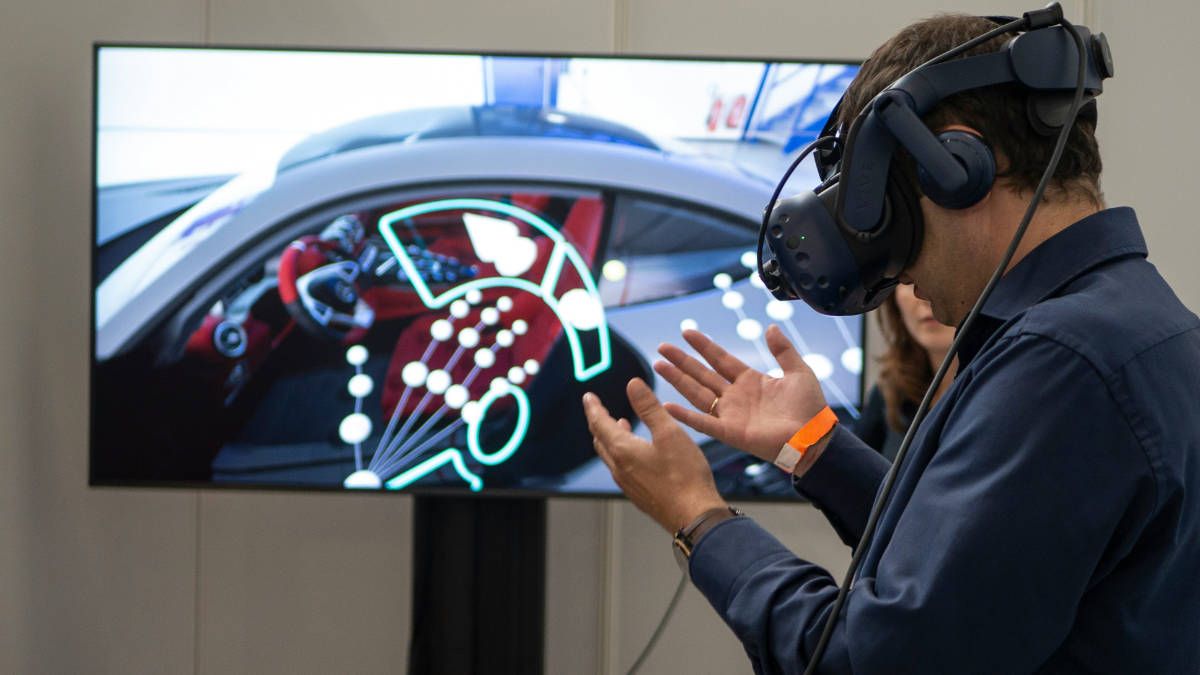
Visitors put on the headset and operate your system themselves. After three to five minutes, they understand your product, and your booth staff has a far more substantial conversation. After the show, the same application keeps working in sales.
Among others for





Why VR at a trade show
Almost every exhibitor has three worries
This is how German exhibitors answered the latest survey by AUMA, the German trade fair association:
Source: AUMA Exhibitor Outlook 2026/2027 (in German)
Cost
The machine stays at the plant. Transport, setup and part of the floor space are no longer needed. The headset travels in your carry-on.
Visitors at the booth
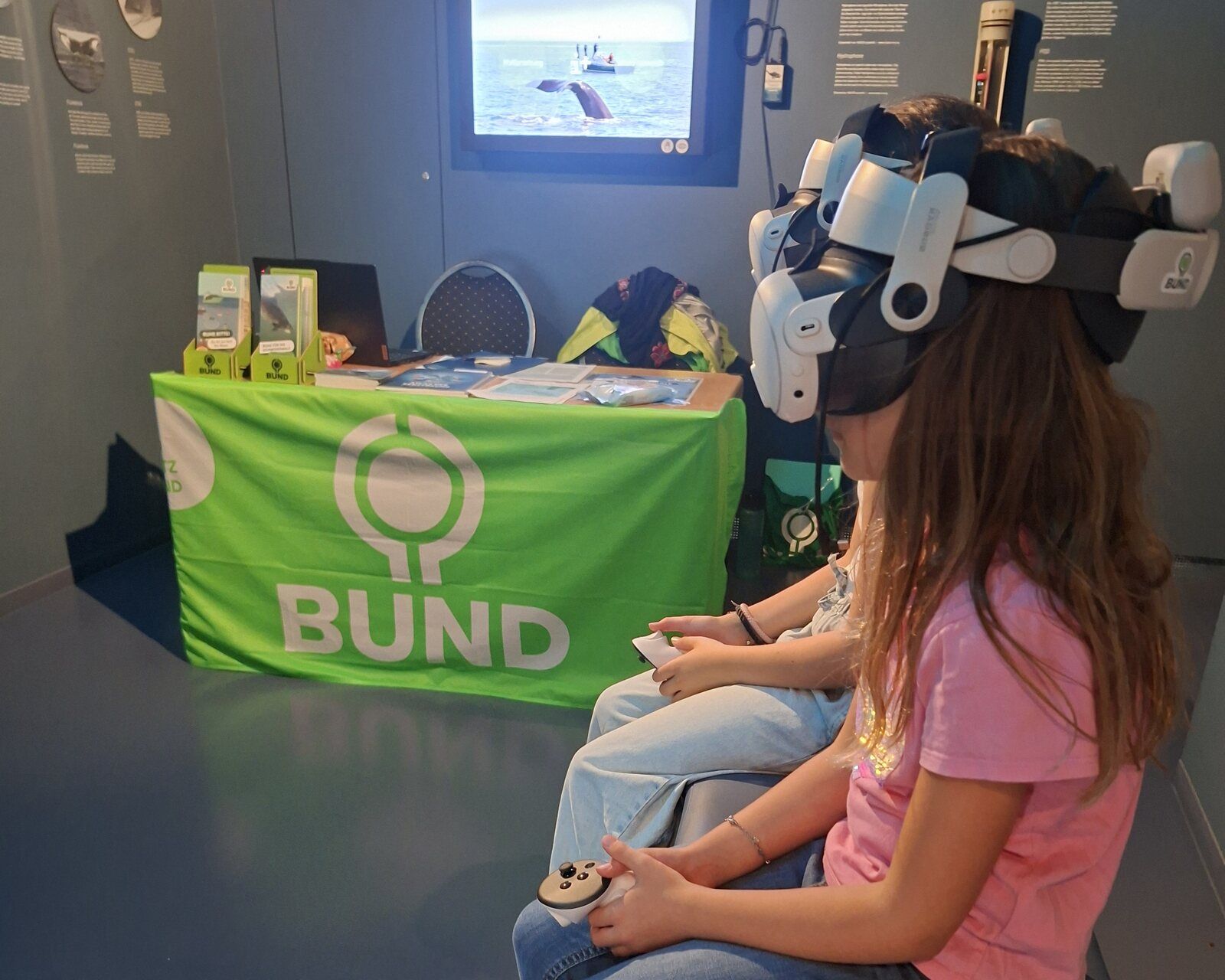
A VR headset is a reason to stop. A screen shows bystanders what the user is experiencing.
Conversations that lead to inquiries
People who have operated your product themselves ask different questions. Your staff starts where the second meeting would normally begin.
Examples from our projects
What visitors can experience in the VR headset
At the booth, the exhibit becomes an experience. Visitors operate it, look inside, ride along or play.
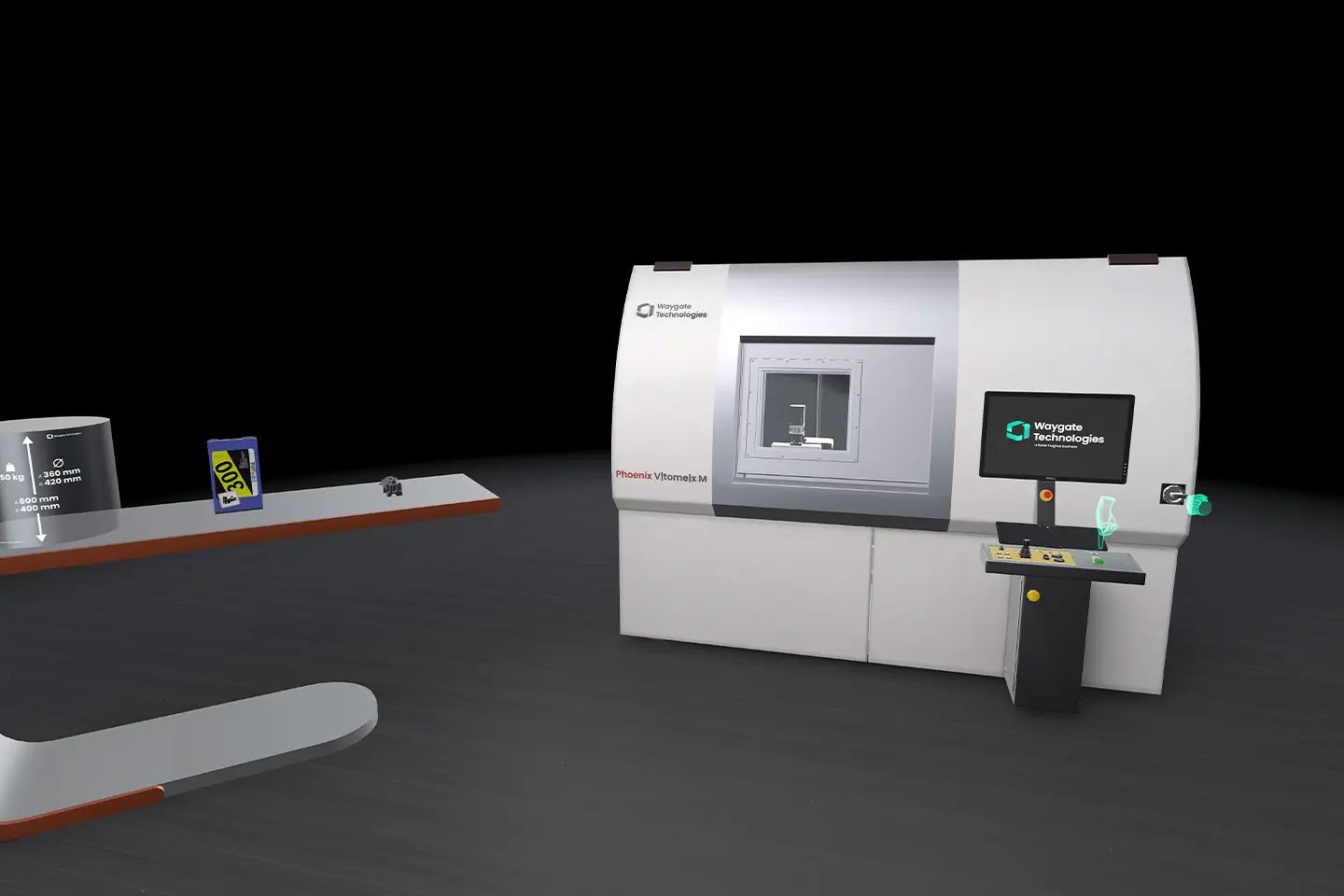
Operate a machine yourself
At Waygate Technologies, visitors position samples in an X-ray inspection system that weighs ten metric tons and often may not even be switched on at trade shows because of the radiation.
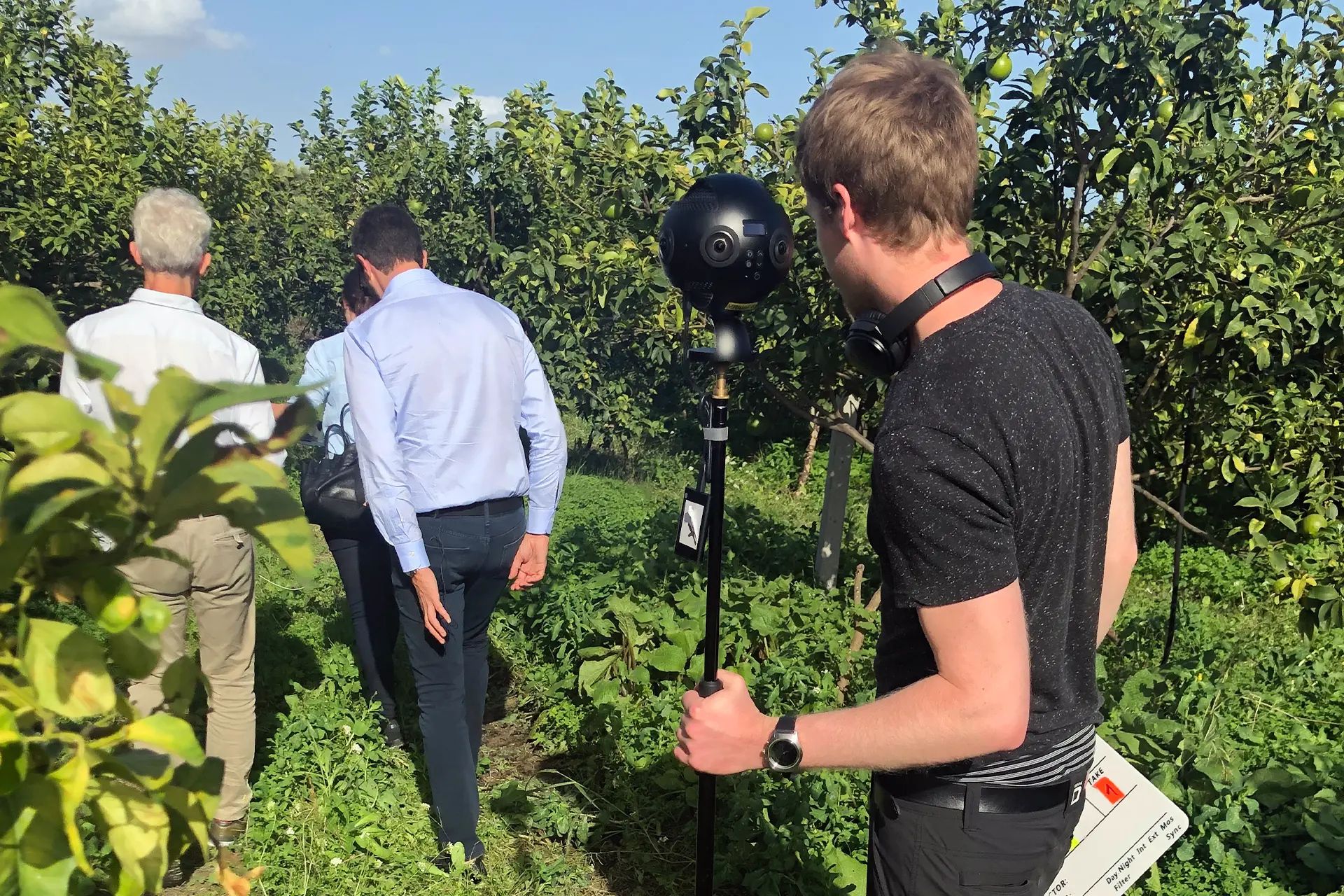
Make the invisible visible
For Symrise, each fragrance gets a room of its own. Visitors see what they would otherwise only smell and travel to the plantations where the raw materials come from.
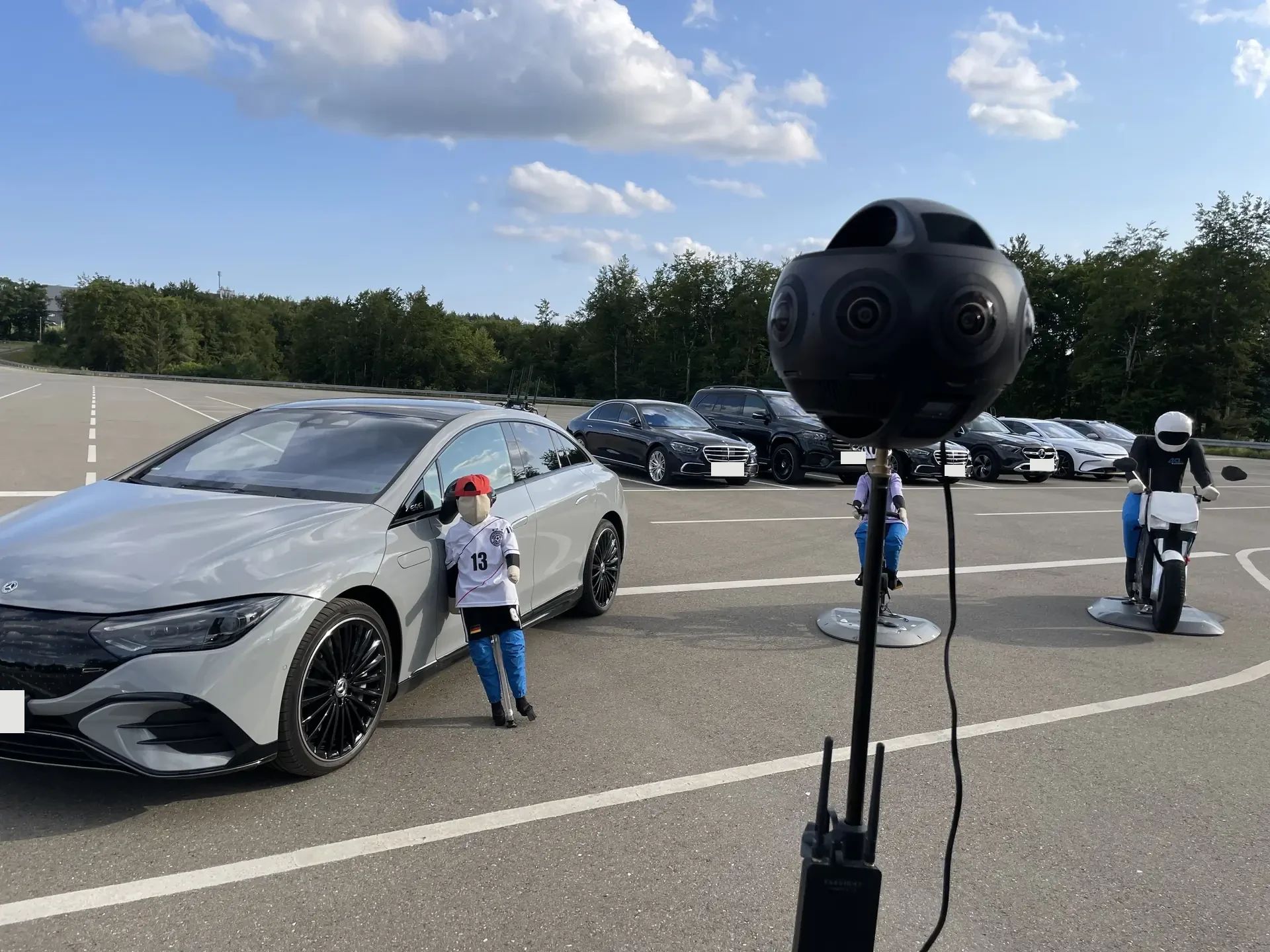
Ride along instead of just looking
For Mercedes-Benz, dealers experience the driver assistance systems from the driver’s seat. The car on display stands still; in the headset, it drives.
Play and learn
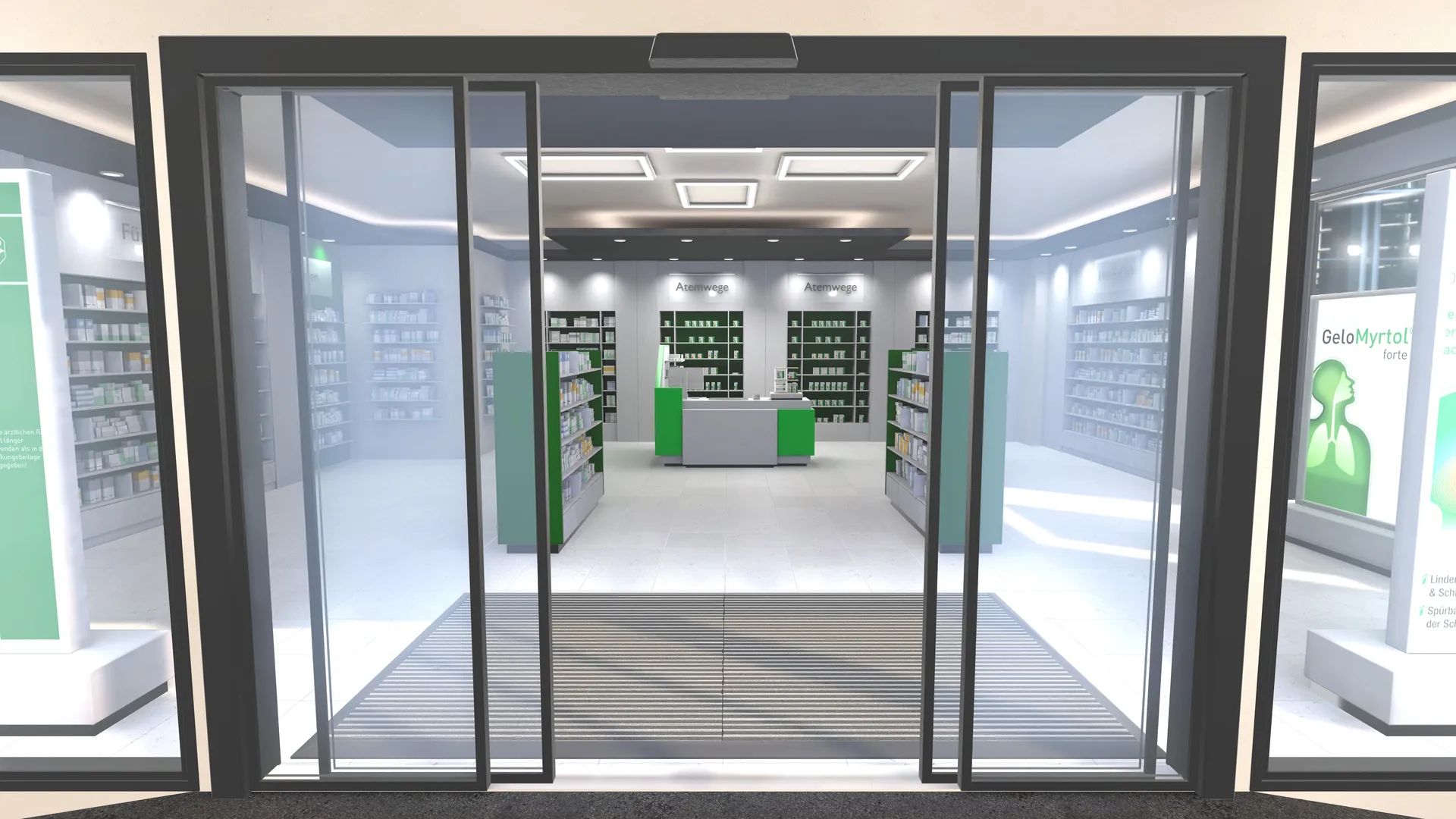
In the virtual pharmacy by Pohl-Boskamp, pharmacy staff choose the right products for the customer in a short game.
What clients say
The project exceeded all expectations. It helped us make a great many contacts. It was definitely worth it, and VRtual X supported us very professionally.

Site Manager, ISOTEC Itzehoe GmbHWhat I really like is that VRtual X does not try to sell the biggest package. They advise you individually, and together you find what works best.

Head of Marketing, SKW PiesteritzYou really nailed the biosonar, and I think the narrator during the scene is really, really good too! I am totally happy. Thank you so much for all your effort and the extra rounds of revisions!
Project lead, “Quiet for the Porpoises” View project: BUND Lower Saxony
BUND Lower Saxony
Development time
Three ways to your booth
The date of the show is fixed. Choose the way that fits: development time plus a four-week buffer for acceptance and for briefing your booth staff.
Ready the fastest
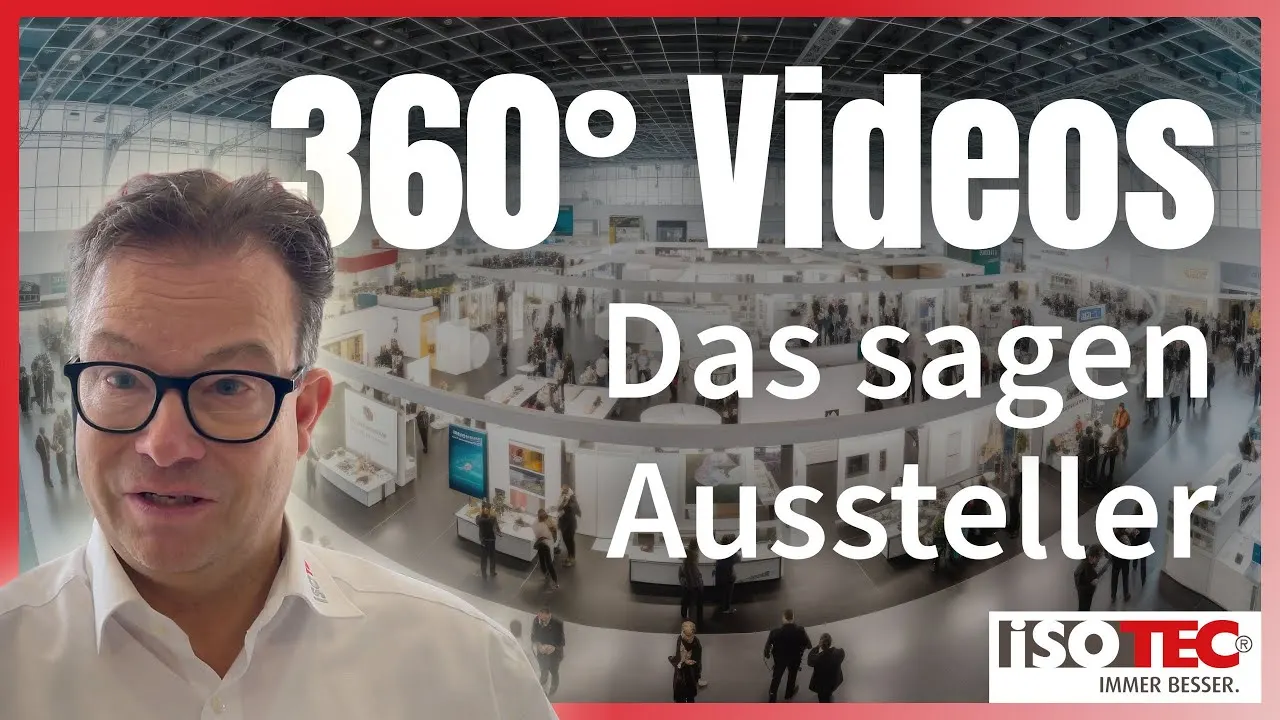
360° video in the VR headset
Ready in 2 to 6 weeks
from €6,000
Depending on scope, €6,000 to €15,000
Visitors stand right inside your plant, ride along or watch your machine at work. The fastest to produce and instantly clear to everyone.
Included
- Concept, shoot and edit
- Installed on the VR headset, runs offline
- Casting to a screen at the booth, so others can watch along
- Afterwards on your website and in sales
Runs on
- VR headset
- Booth screen
- Browser
Built from proven modules
VR built from ready-made modulesRecommended
Ready in 6 to 12 weeks
Quoted by scope
Your product at full size, as a short experience at your booth. Faster and more affordable than custom development, because we build on proven modules.
Included
- Your product in 3D and at full size
- A three- to five-minute session
- Multilingual on request
- Installed on the VR headset, runs offline
Runs on
- VR headset
- Booth screen
The strongest experience
Interactive VR simulation
Ready in 2 to 4 months
Usually starts with a prototype
Visitors operate your system themselves, as at Waygate Technologies. The strongest experience at the booth, and afterwards a tool for sales and training.
Included
- An operable machine with real processes
- Even large or hazardous systems
- For trade shows, sales and training
- Grows over months or years
Runs on
- VR headset
- Booth screen
All prices exclude VAT. What VR built from modules and interactive simulations cost depends on the scope; typical budgets are in our article How much does VR development cost?. If time is short, talk to us anyway: with ready-made modules, some things go faster. At the booth, add your product as a 3D exhibit on a tablet or touchscreen, from €1,500, which keeps running on your website after the show. Rental headsets, rental tablets and on-site support for applications we developed: Rent VR headsets.
Rules of thumb from our trade show projects
- minutes per session
- 3–5
- visitors per hour and headset
- 8–12
- of space per headset at least, better 2 × 2 m
- 1 × 1 m
- headsets one dedicated person can look after
- 5
How we calculate this, and more benchmarks: VR headset at the trade show booth: process, staff and space
Calculator
How many VR headsets do you need at your booth?
Enter how many visitors should try your application per day. The calculator uses our experience: about two minutes per visitor for putting on, explaining and cleaning, and always one spare.
VR headsets at the booth
2
plus 1 spare
- Supervision
- your booth staff on the side
- Space for the headsets
- at least 1 m², better 4 m²
Maximum values at full utilization. How we calculate: VR headset at the trade show booth: process, staff and space
Calculate your savings
What a VR application saves at your trade shows
If the exhibit stays at the plant, you save shipping, setup and floor space at every show. Enter your figures and see how much budget your shows bring back in two years.
- Savings per show
- –
- Savings per year
- –
- Savings over two years
- –
This is how much the VR application can cost and still pay for itself through trade shows alone within two years.
Not included: the value after the show, in sales and training.
Questions about using VR at a trade show
Does VR replace the exhibit?
What can travel and run is best shown in the original, where people can touch it. VR adds what the booth is missing: the machine in operation, the inside of the product, the entire portfolio. The car on display stands still, and the printing press may not run in the hall. In the VR headset, they drive and print. There, every visitor chooses what interests them, sees the product at work at a customer site and is shielded from the noise of the show.
When shipping and floor space become too expensive, the VR application replaces the exhibit entirely. A screen at the booth gives an overview to everyone passing by or waiting.
How early do I need to commission it?
Plan for the development time plus a four-week buffer for acceptance and briefing. A 360° video takes 2 to 6 weeks, a VR application from ready-made modules 6 to 12 weeks and an interactive simulation 2 to 4 months.
How many VR headsets do I need at the booth?
Our clients usually run one to five headsets at a trade show. If one person looks after both visitors and headsets, we recommend no more than two devices. With one person dedicated to the headsets, up to five are possible. Always plan for a spare.
How much space do I need at the booth?
At least one by one meter per headset, better two by two. Add a screen so bystanders can watch along.
Does VR work at a trade show without internet?
Yes. The content is stored on the headset. Internet is only needed if someone joins from outside, for example an expert at the plant. Mirroring the view to a screen may also need an internet connection, depending on the VR hardware.
How many visitors can one VR headset handle per hour?
On top of three to five minutes in the application, allow about two minutes for putting it on, explaining and cleaning. One headset can handle eight to twelve visitors per hour, 60 to 100 on an eight-hour show day. These are maximums at full capacity.
How long does one session take?
We design trade show applications for three to five minutes. That is enough for a lasting impression and keeps the wait short.
Can I use a tablet at the booth too?
Yes, for interactive 3D content: your product as a 3D exhibit to rotate, with info points, from €1,500. It runs on a tablet or touchscreen at the booth and keeps running on your website after the show. A 360° video, on the other hand, belongs in the VR headset, because only there does the visitor stand inside the picture.
Learn more: Virtual showroom
What happens to the application after the show?
It is yours and keeps running. German exhibitors attend about five trade shows in two years on average (AUMA exhibitor outlook 2026/2027, in German). In between, your sales team uses the same application at customer sites, and your training team ships headsets instead of flying in participants. As a virtual showroom in the browser, it also reaches everyone who did not visit your booth, with no headset at all.
That is how our client Waygate Technologies does the math: a single one of its X-ray inspection systems weighs ten metric tons and needs heavy transport to the show. In VR, every model is ready at the same time at every show, every customer meeting and every training session. You can add products and functions later.
Learn more: Waygate case study
Do I have to buy the headsets?
No. For applications we developed, we lend you headsets and tablets, set up and with on-site support at the booth if you like. For regular use in sales after the show, though, one or two devices of your own are worth it.
Learn more: Rent VR headsets with support
Which trade show applications have you built?
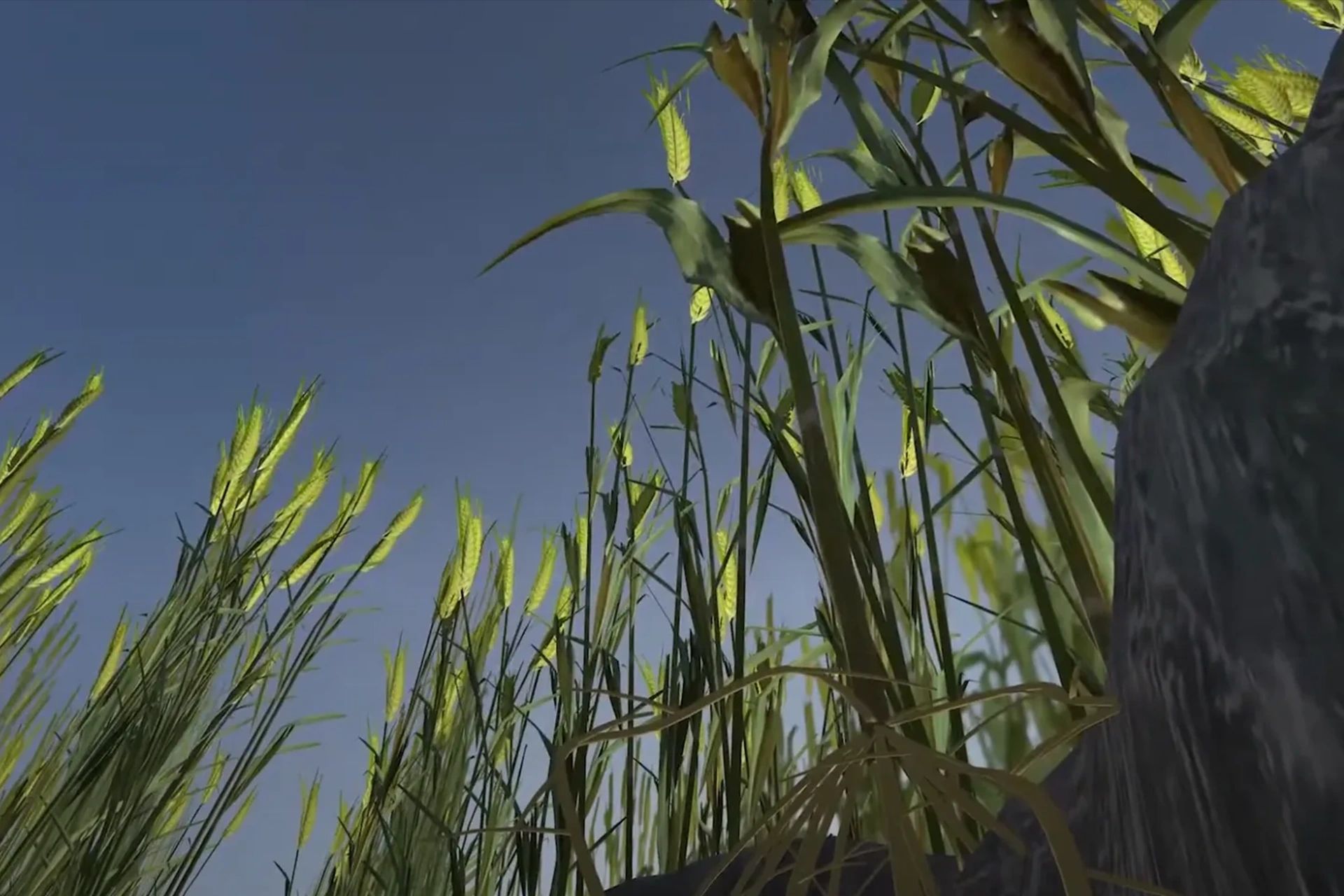
Among others, an operable X-ray inspection system for Waygate Technologies, walk-in fragrance worlds for Symrise, a journey into the soil for SKW Piesteritz, driver assistance systems from the driver’s seat for Mercedes-Benz, a virtual pharmacy game for Pohl-Boskamp and 360° videos for career fairs at Isotec.
Can an AI avatar guide visitors at the booth?
Yes. On request, we build an AI avatar into our applications. Visitors talk to it freely, in many languages, and it answers from the knowledge you give it. That way, everyone gets a personal tour, even when your team is busy in another conversation.
Learn more: AI avatar
Is the application available in several languages?
Yes. Most of our projects are multilingual. We agree on the languages you need for your shows before we send a proposal.
Can people who wear glasses take part?
Yes. Most everyday glasses can be worn inside the VR headset.
How do the headsets stay hygienic?
At trade shows, you clean the headset’s padding and controllers with a disinfectant wipe after every user. Alternatively, you offer disposable face masks, so there is no skin contact.
When is your next trade show?
Tell us the date and the product. We will tell you which of the three ways is feasible by then and what it costs.
 Your contactTim B. Frank Founder and Managing Director
Free intro call
Picking a day opens the Calendly booking calendar. This sends data to Calendly. Privacy