
Augmented reality and mixed reality
Augmented reality: digital content right where the work happens
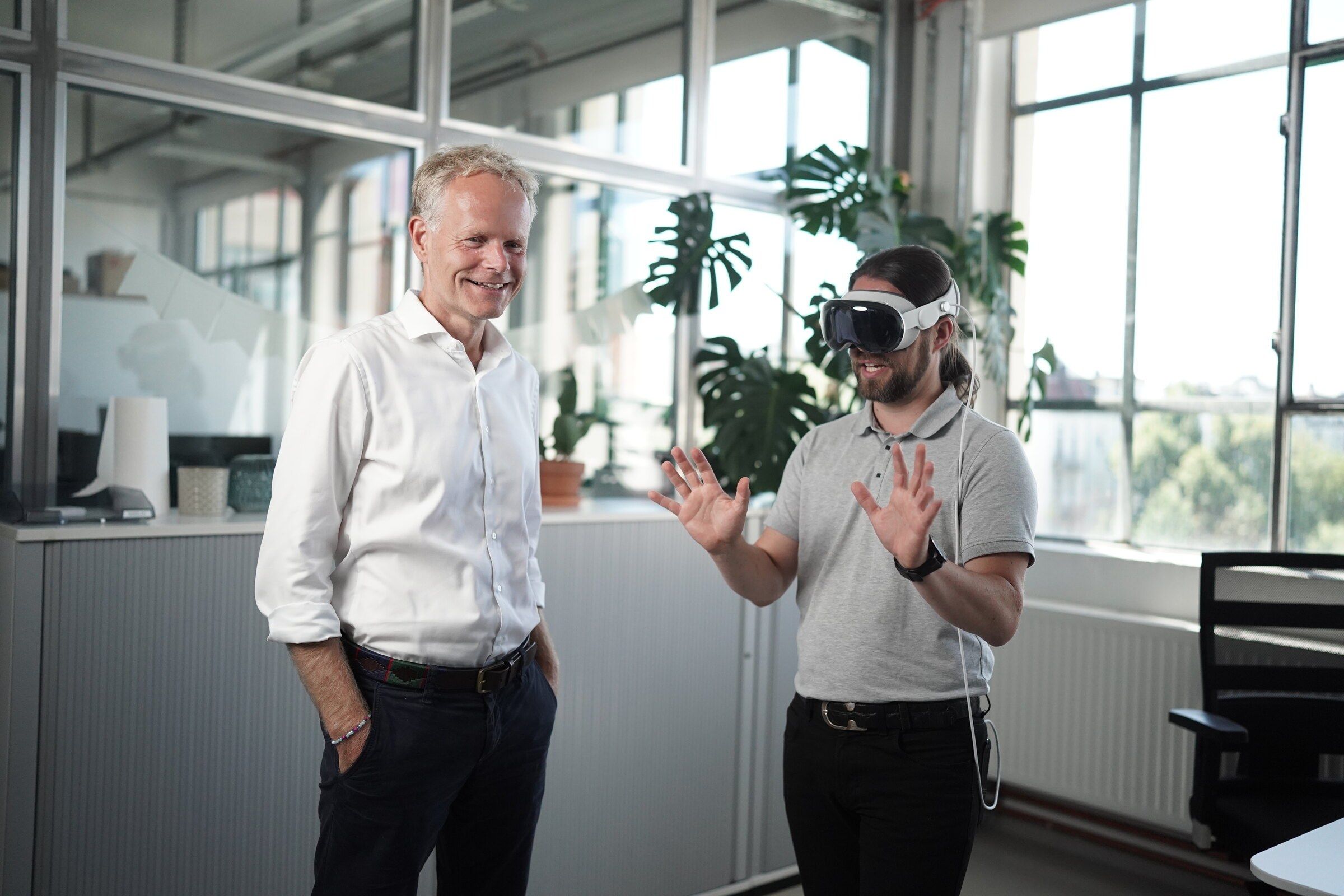
In augmented reality, you still see the real room, and your digital content joins it: the machine on your customer’s shop floor, the instructions on the device, the product on the trade show table. The fastest way to start is on smartphones and tablets, with no new hardware. If hands need to stay free, we develop for the new headsets and glasses.
Use cases
What companies use augmented reality for
One in five companies in Germany uses augmented reality. Of these, 64 percent use it for training, 60 percent for design and planning, 34 percent for marketing and trade shows, and 22 percent for remote maintenance. Source: Bitkom, survey of 605 companies, 2024 (in German).
Training on the real equipment
The headset shows the next step on the real device. Trainees keep their hands free and can see their colleagues.
Planning and alignment
Equipment, furniture or components appear at the planned location. Everyone involved sees the same thing and discusses it on site.
Marketing, sales and trade shows
Your product stands at full scale at the booth or in the customer’s meeting room. Variants change at the point of a finger.
Remote support
An expert joins remotely and places notes and markers directly in the field of view. Problems get solved without anyone traveling.
Swisscom project
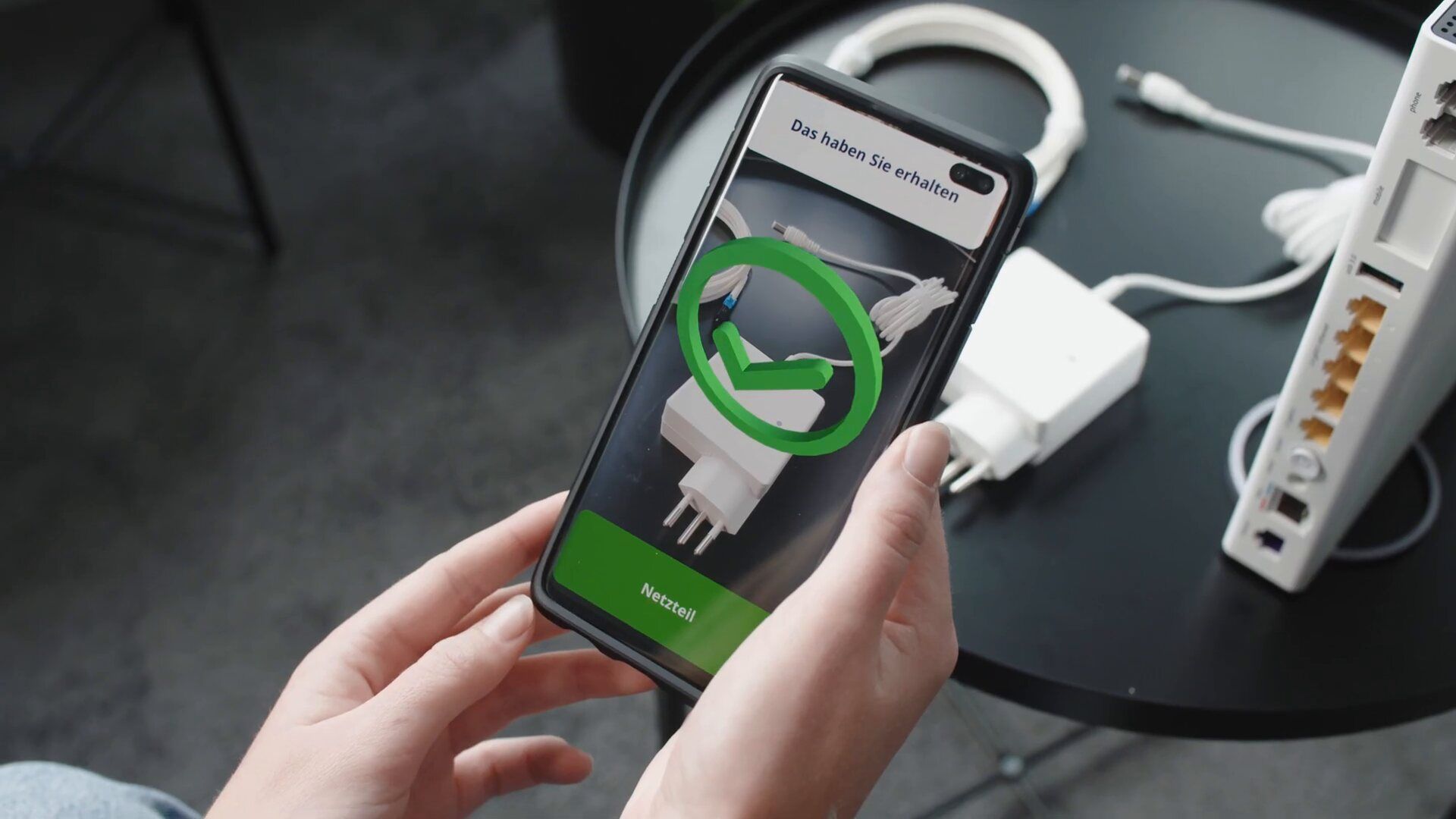
Setting up the router, step by step on the real device
Anyone unpacking a new router faces cables, sockets and a printed manual. For Swisscom, we built an app with object recognition: it identifies the router, power supply and cables through the camera and shows in augmented reality, right on the device, which cable goes into which port and which button to press when.
The principle works for any device that customers or employees put into operation themselves.
Case studies
Augmented reality in practice
On the Klimaerlebnispfad, a climate discovery trail in the Urland region near Oerlinghausen, Germany, a Highland cow named Urli guides visitors along five kilometers (about three miles) of hiking trail in augmented reality. Visitors collect animals, plant a forest and see what the valley looked like in the Ice Age. The tour runs on their own smartphones.
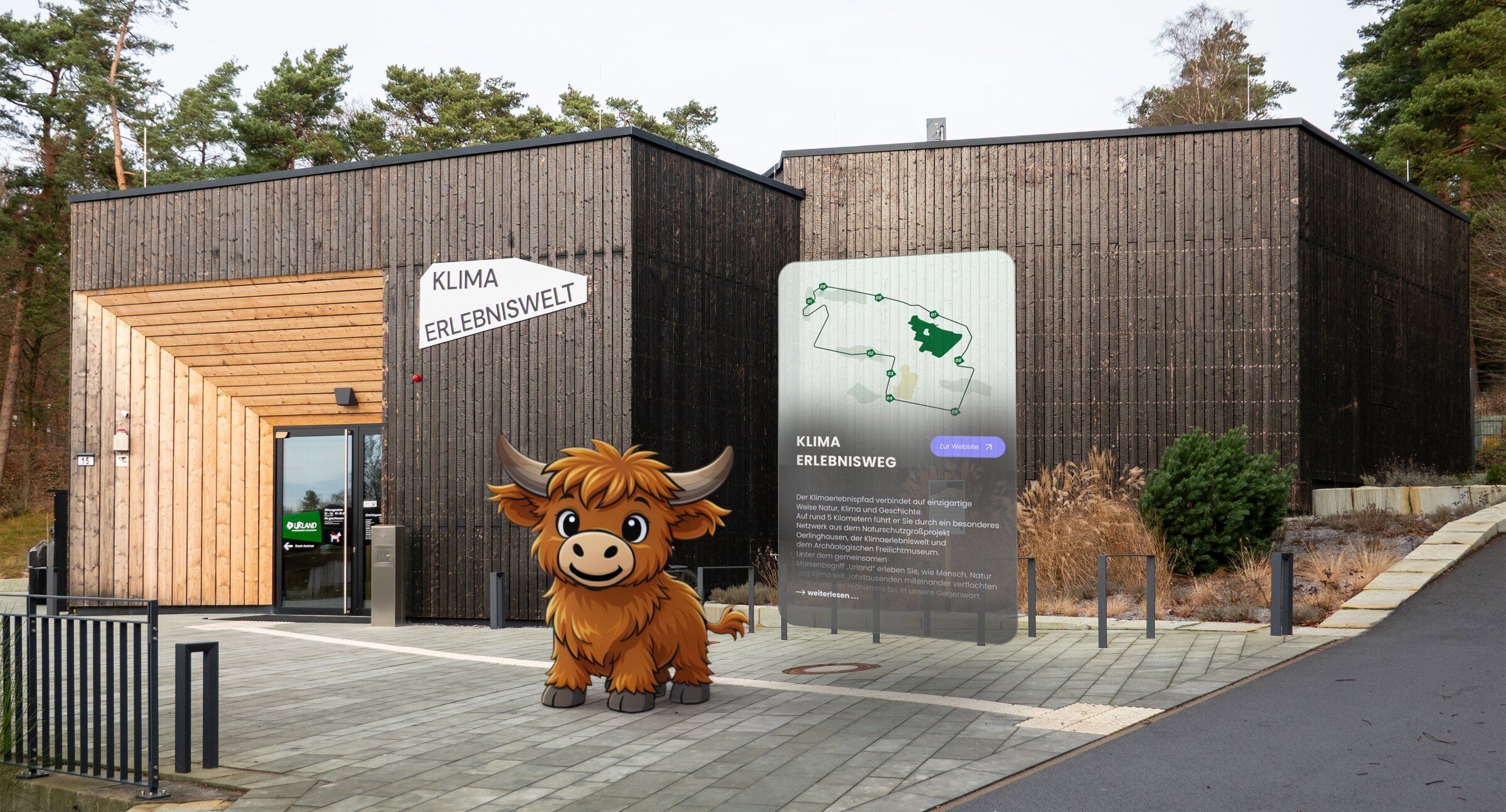
Klimaerlebnispfad Oerlinghausen: Augmented Reality Along Five Kilometers of Hiking Trail
On the Klimaerlebnispfad in Oerlinghausen, Urli the Highland cow guides visitors through forest and Senne in AR. They collect animals, plant a future forest, and travel in time.
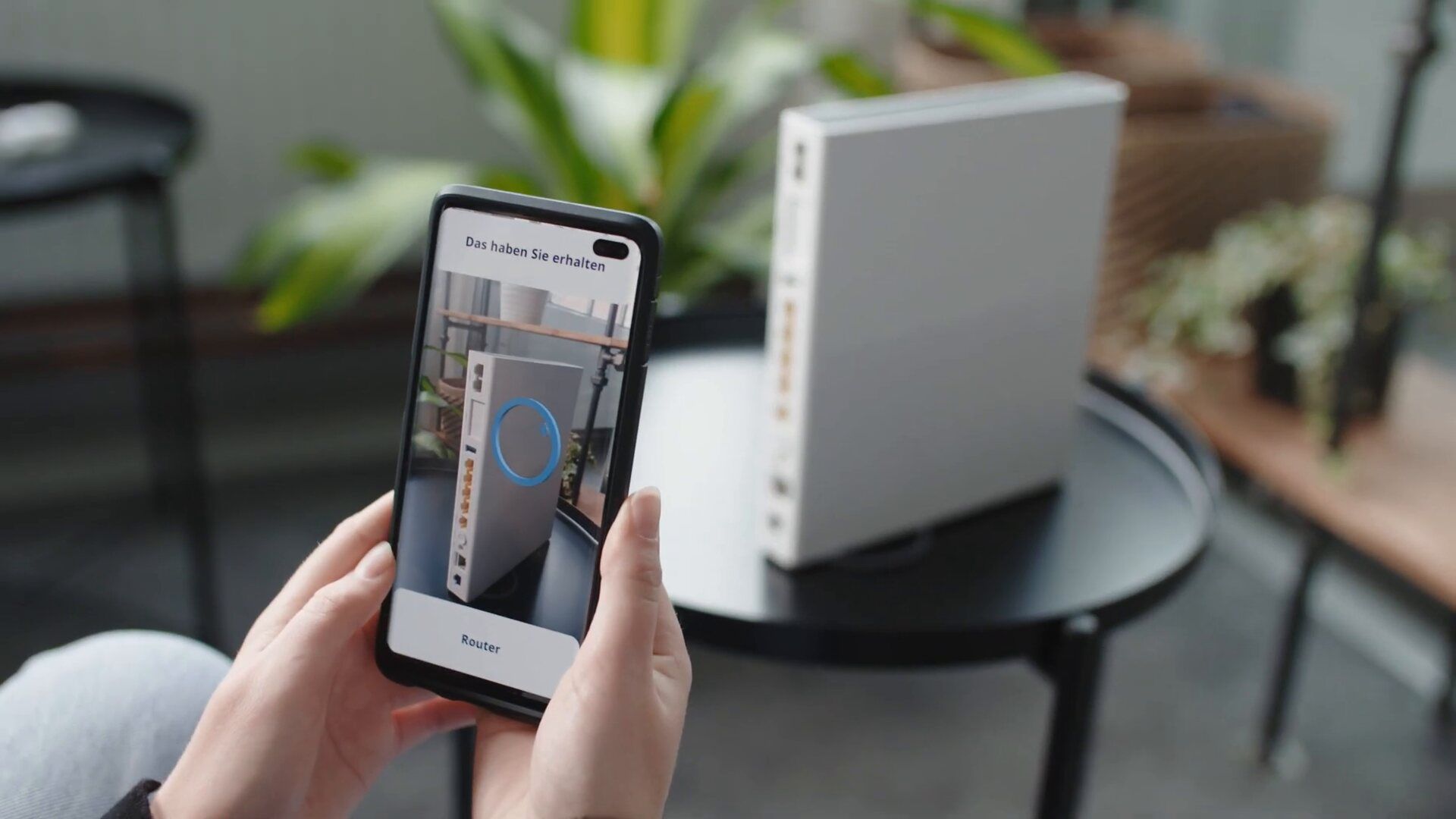
Swisscom: Setting Up the Router With Augmented Reality and Object Recognition
The augmented reality app for Swisscom recognizes the router, power supply, and cables through the smartphone camera. It shows right on the device which cable goes into which port and which button to press when.
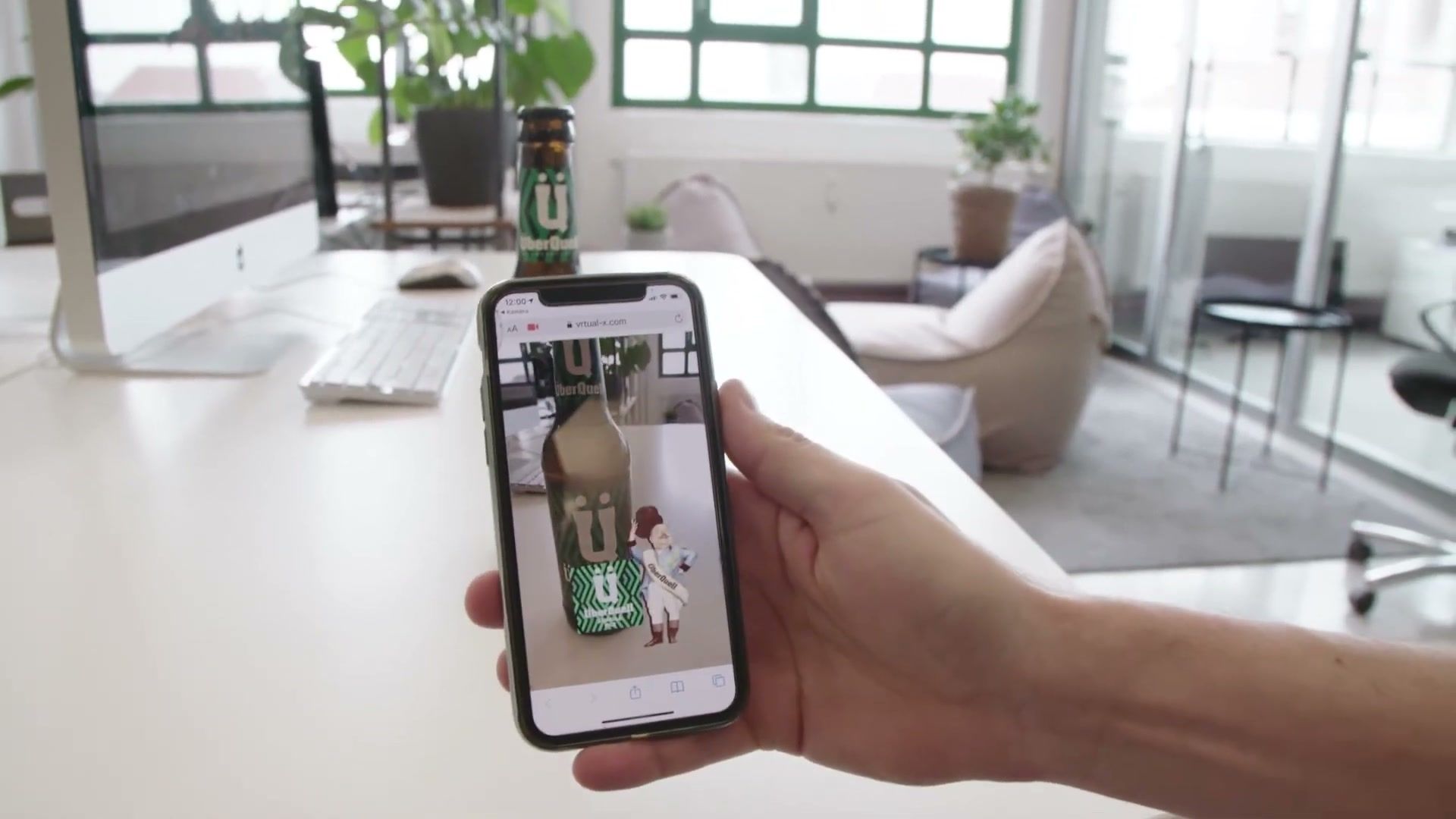
ÜberQuell: Bambule Pils With Augmented Reality on the Label
Scan the Bambule Pils label with your smartphone and Johnny the ringmaster appears on the table. Next to the bottle, the brewery’s colorful Bambule world unfolds, right in the browser and without downloading an app.
Devices
Four kinds of devices
We have been developing for immersive headsets since 2016. We test new devices as soon as we can get hold of them, often before they go on sale in Europe. For a project, what matters is whether the device can anchor content firmly in the room.
| Type | Examples | Strengths | Limits |
|---|---|---|---|
| Mixed reality headset with camera passthrough | Meta Quest 3, Apple Vision Pro, Samsung Galaxy XR, Pico 4 Ultra Enterprise | Content stays fixed in the room, hand and eye control, full VR as well | Closed design, more weight |
| AR glasses with optical see-through | XREAL One, XREAL One Pro, XREAL Aura | Light, with a clear view of the real surroundings | Smaller field of view, usually a cable to a phone or compute unit |
| Smart glasses with a small display | Meta Ray-Ban Display | Everyday form factor, notes and navigation in view | No spatial 3D content |
| Tablet and smartphone | iPad, iPhone, Android devices | Almost everyone has one, nothing to buy | One hand holds the device, less sense of scale |
As of October 2026. Availability differs by country: the Samsung Galaxy XR is sold in the United States, South Korea and the United Kingdom, and the XREAL Aura has been announced for fall 2026.
Questions about augmented reality
What can augmented reality do that virtual reality cannot?
The surroundings stay visible: users see colleagues, customers and their own workplace, which lowers the barrier and makes conversation possible. Content appears on the real object, so notes, dimensions and work steps show up right on the machine or part. And products stand in the room at full scale, for example a machine on the customer’s shop floor before it has been built.
Virtual reality or augmented reality?
Virtual reality fits when the location is unavailable, too dangerous or not built yet and nothing should distract, for example when practicing an emergency on a machine. Augmented reality fits when the real surroundings, the real device or the conversation with others is part of it, for example when the machine should stand on the customer’s shop floor. Headsets such as the Meta Quest 3 or the Apple Vision Pro switch between both worlds, so one application can use both: show the product in the room, then step inside.
Read more: Virtual, mixed and augmented reality: the difference
What is the difference between augmented reality and mixed reality?
Augmented reality overlays digital content on the real surroundings. It is called mixed reality when that content stays fixed in the room and responds to the surroundings, for example by disappearing behind a real table. In everyday use, the two terms are often used interchangeably.
How much does an AR application cost?
As much as a VR application of comparable scope. Smartphones and tablets are the most affordable option, because no headsets need to be bought. As with VR, larger projects usually start with a prototype and grow over months or years. We quote a price as soon as we know your plans.
Read more: How much does VR development cost? and How much does a VR headset cost?
Which device is suitable for augmented reality in a company?
For most projects, the Meta Quest 3: it is affordable, widely used and shows the surroundings in color. For the highest image quality, the Apple Vision Pro. The Samsung Galaxy XR runs on the open Android XR standard, which the XREAL Aura also uses. Light AR glasses such as the XREAL One are a good fit when content in the field of view is enough and the glasses are worn for a long time.
Read more: How much does a VR headset cost?
Does augmented reality work without a headset?
Yes. On tablets and smartphones, augmented reality runs without buying anything else. That is a good way to start, and it reaches many users. A headset pays off when hands need to stay free or when the scale of a product should make an impression.
Can we use an existing VR application for AR?
Often, yes. 3D models, procedures and controls can be carried over. Lighting, scale and anchoring in the room are adapted. Where it makes sense, the same application runs on a headset, a tablet and in the browser.
What else can augmented reality be used for?
With WebAR, users open a link or scan a QR code and see your product in their surroundings, without installing an app. In tourism, visitors point a smartphone or tablet at the landscape and see what the place used to look like and what is changing. In lobbies and exhibitions, visitors see what usually stays hidden in the building: processes, technology and figures, displayed in the real room.
Is there an AI avatar in augmented reality too?
Yes. On request, we build an AI avatar into our applications that users can talk to freely. It stands next to your product and explains it, in many languages.
Read more: AI avatar
What should appear in your room?
Tell us about the product, the place and the occasion. We will tell you which device fits and what is possible.
 Your contactTim B. Frank Founder and Managing Director
Free intro call
Picking a day opens the Calendly booking calendar. This sends data to Calendly. Privacy