
Trade show booth ideas 2027: 9 visitor magnets with 3D and virtual reality
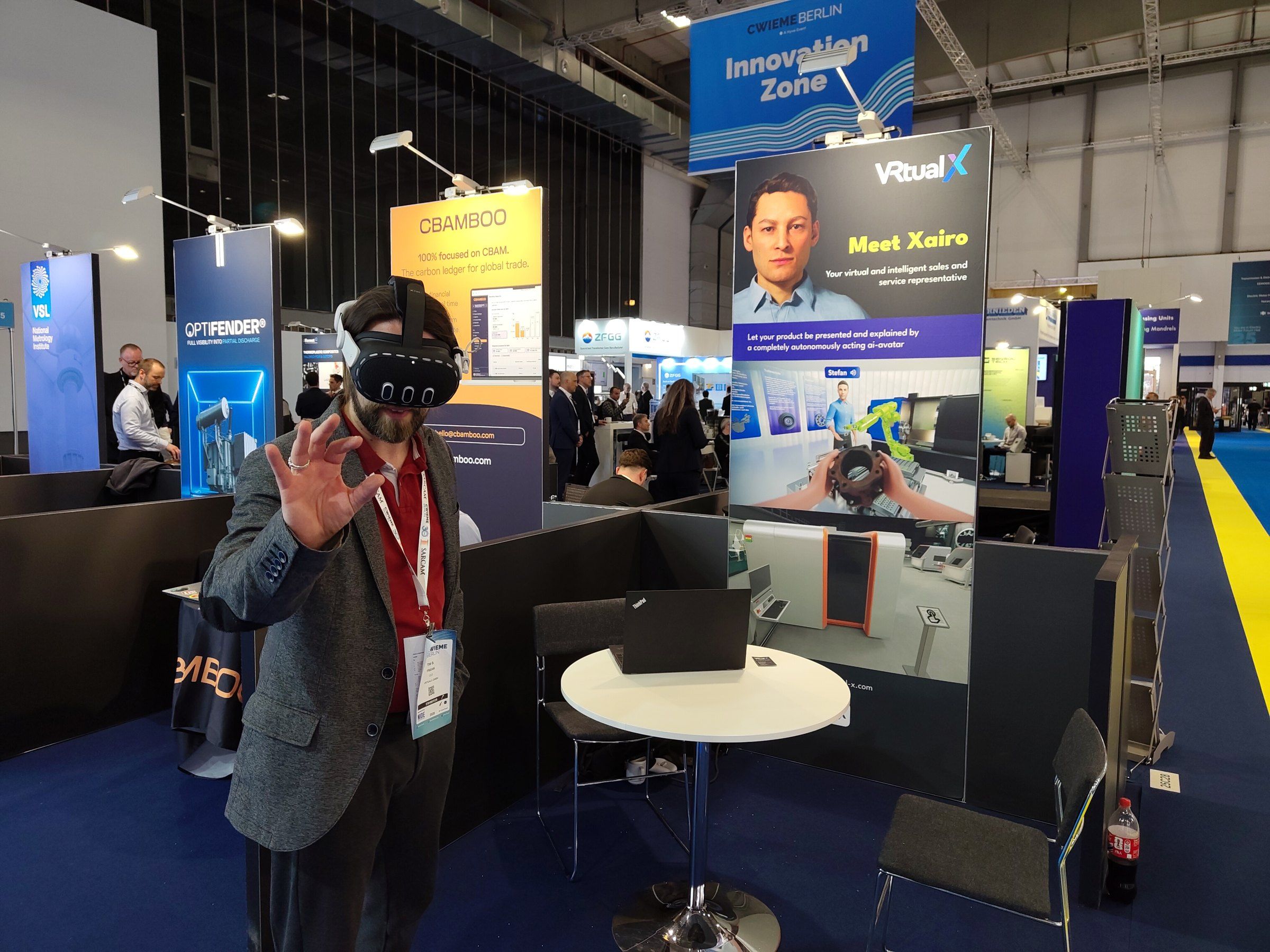
At a trade show, you have a few seconds. That is how long it takes a visitor to walk past your booth. A good visitor magnet stops them, sparks their curiosity and leads to a conversation that would not have happened otherwise.
Exhibitors know this. In the exhibitor outlook of AUMA, the German trade fair industry association, 44 percent name activating visitors as a major challenge, and about half measure trade show success by leads and contacts (AUMA Exhibitor Outlook 2026/2027, in German). Here are nine ideas from 3D and virtual reality that make your booth stand out. Look at the pictures and read on wherever something catches your eye.
1. Your product floats in true 3D, without a VR headset
A 3D display shows your product in space, as if it were standing behind a pane of glass. Visitors see it in true 3D, several at once, without glasses. When they move their head, they look around the product. Everyone gets it instantly, without explanation, and that is why people stop. The product can also take itself apart: the view moves in on a detail, highlights it and explains it in a short text.
The display fits on the counter, into the booth wall or as a column at the corner facing the aisle. Nothing needs to be put on, handed out or cleaned. We deliver the display with content built from your 3D data.
How we do it: 3D display without glasses
2. A mascot in the 3D display
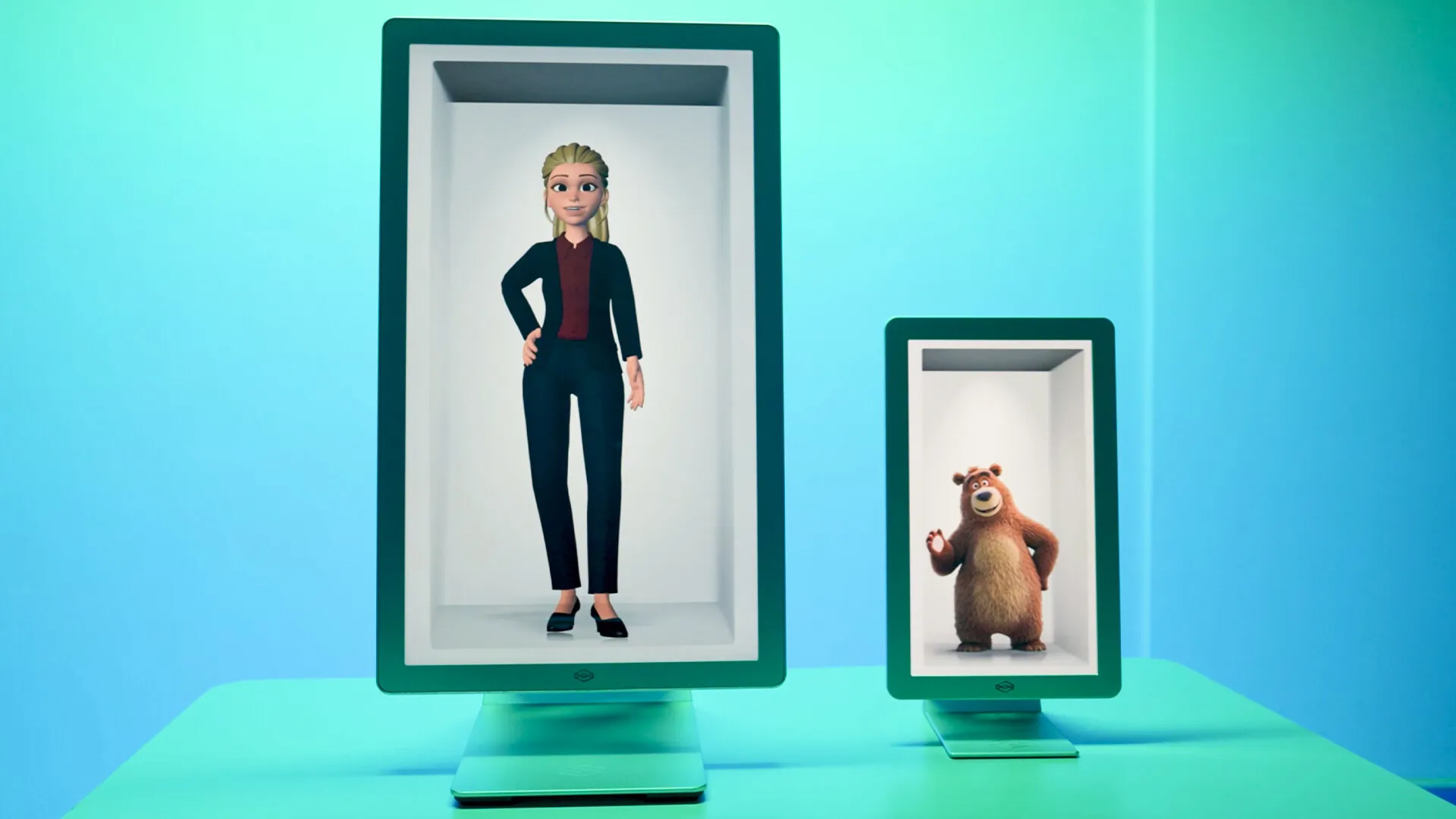
The same 3D display, a different idea: instead of a product, it shows a character. Your mascot waves at passersby, points to your product or announces the next demo. Because the character stands in the screen in three dimensions, it seems almost alive.
At 86 inches, it becomes a character of almost human size, for the front of the booth, a lobby or an entrance.
How we do it: 3D display without glasses
3. An AI character that talks to visitors
A life-size 3D character stands on a large portrait monitor. It addresses visitors, understands their questions and answers freely: about your product, your company, your program at the booth. It shows emotions, gestures and speaks many languages.
On request, the character collects contact details, refers visitors to the right person or hosts a short quiz. Your booth staff are free for the conversations only people can have.
A standard monitor is all it takes. Your booth may already have one built in. You can try for yourself what a conversation with the character feels like on our site TalkyPage, which uses the same technology. The same AI is also part of our applications for VR and AR headsets, for example as XAIRO, which explains your product inside the headset.
How we do it: AI avatar
4. The VR headset: an experience nobody forgets
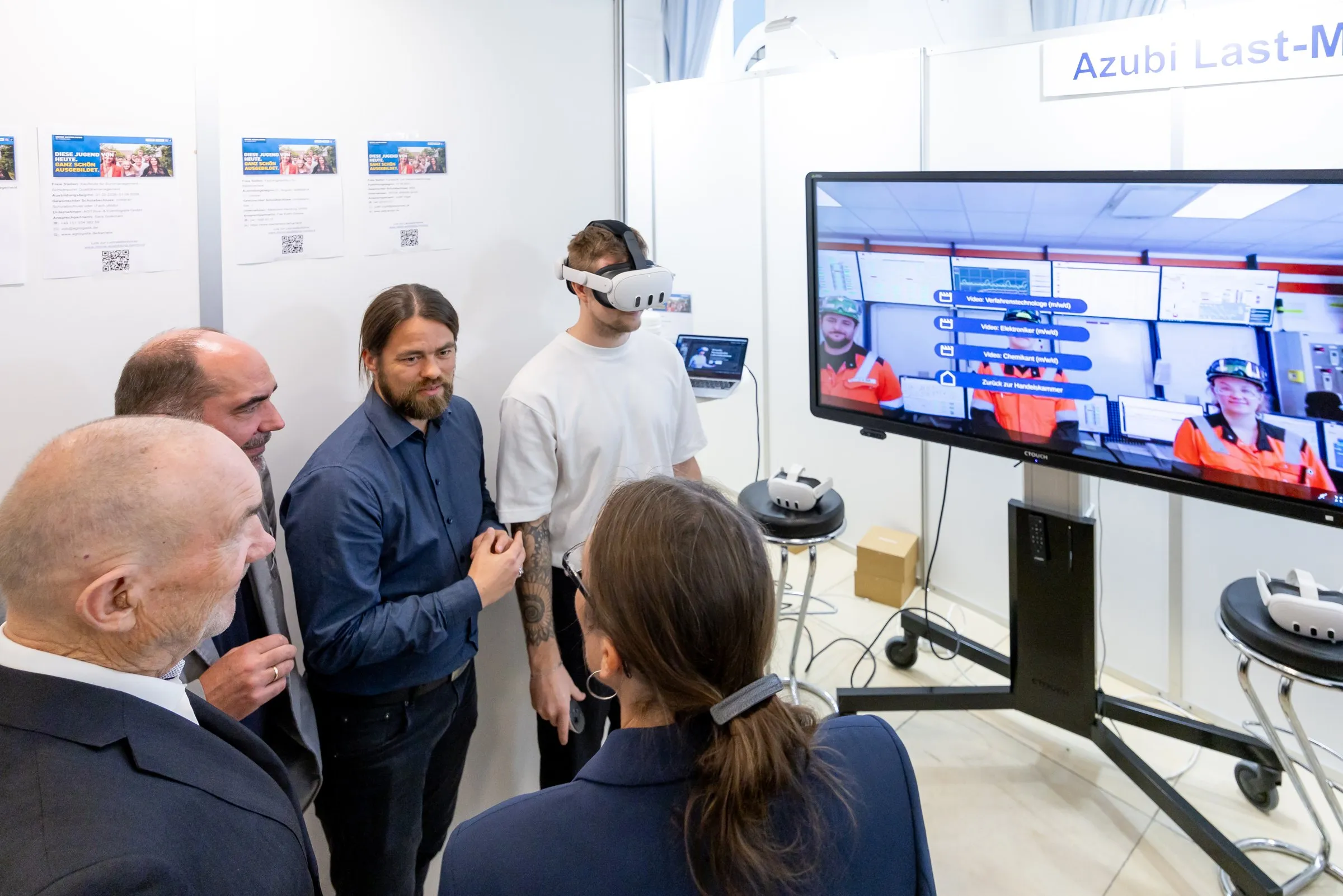
The VR headset is not new, but few other media have the same effect: whoever puts it on is fully focused on your product for three to five minutes. And on a screen at the booth, the people around can watch what they are experiencing. One user turns into a group of spectators who line up for their turn.
What visitors experience in the headset depends on your product. Some examples from our projects:
- Operating equipment that cannot come along: At Waygate Technologies, visitors position samples in a ten-ton X-ray inspection system (case study)
- Riding along instead of watching: Dealers experience Mercedes-Benz driver assistance systems from the driver’s seat (case study)
- Making the invisible visible: At Symrise, each scent gets a room of its own (case study)
- Playing and learning: In Pohl-Boskamp’s virtual pharmacy, pharmacy staff pick the right products (case study)
- Experiencing the job at a career fair: Since then, Isotec’s booth has drawn many times as many visitors (case study)
Mixed reality goes one step further: headsets like the Meta Quest 3 or the Apple Vision Pro show your virtual product right in the real booth, at full size. Visitors walk around it and talk to your booth staff while doing so, without losing touch with the room.
How we do it: VR at trade shows and events. The fastest way into the headset is a 360° video, from €6,000.
5. Your product or a game on a touchscreen
Not everyone wants to put on a headset. On a touchscreen, visitors rotate your product with a finger, open info points and pull it apart. Or they play a short game, and a leaderboard invites their colleagues to beat their score.
The best part: it is sustainable. What runs on the touchscreen keeps running on your website after the show, in the browser, without an app. Try it yourself: 3D exhibit live.
How we do it: 3D exhibit and 3D showroom. A 3D exhibit starts from €1,500.
6. 3D product configurator on a tablet
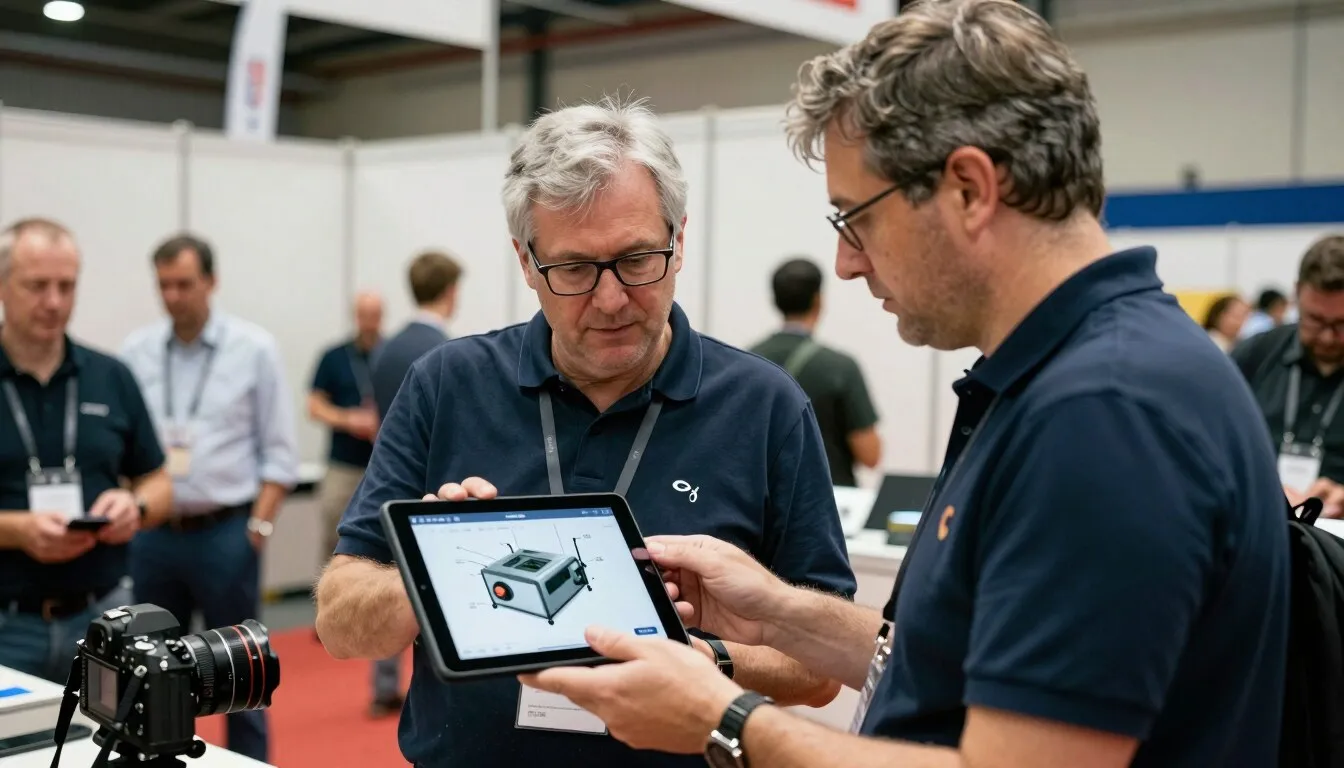
Your booth staff hold the product in their hands: on a tablet, in real-time 3D. During the conversation, salesperson and customer choose color, features and accessories together, and the product changes before their eyes. The conversation starts with the customer’s ideal configuration, not with a brochure. If you like, mirror the tablet to a large monitor so everyone at the booth can watch.
After the show, the same configurator runs on your website and in sales.
How we do it: 3D configurator
7. Augmented reality via QR code: a booth to take home
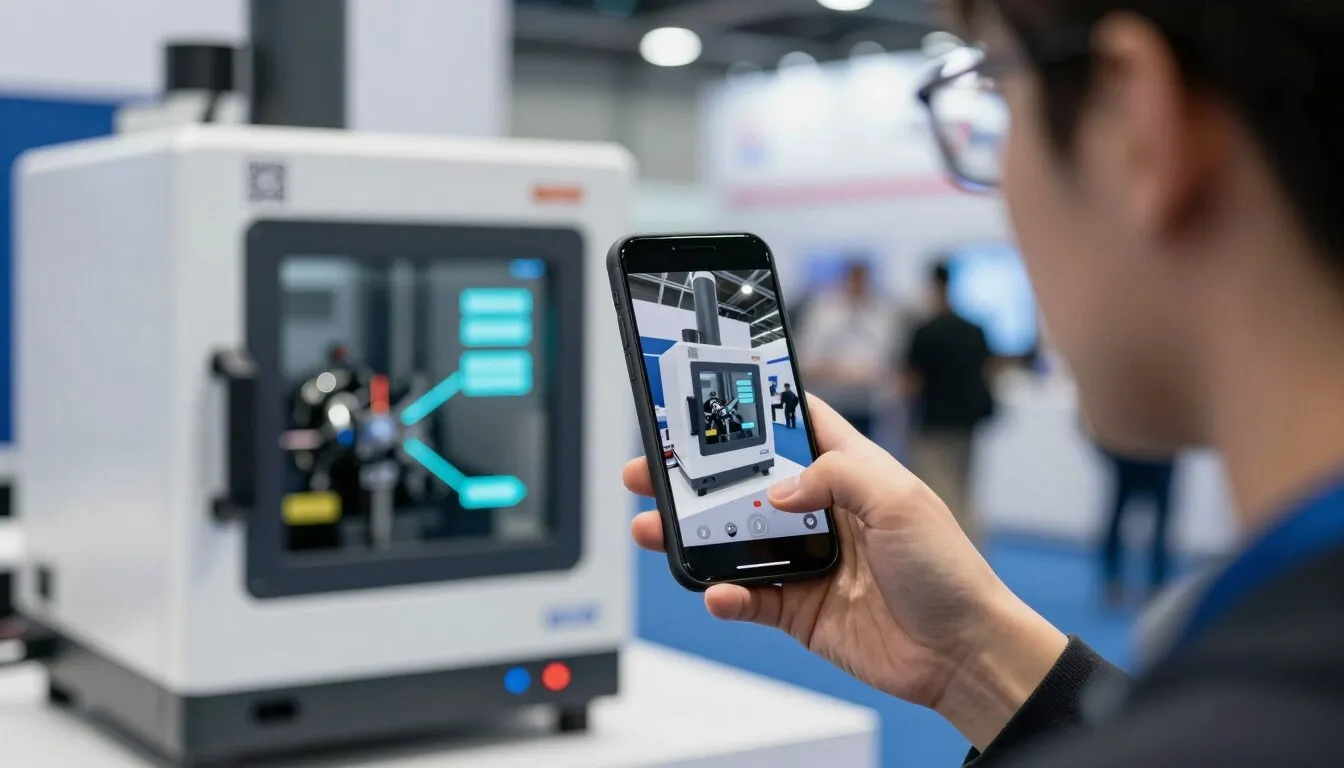
A QR code is stuck on the exhibit. Visitors scan it, and labels, arrows and processes appear in the camera view right on the real product, without installing an app. Without an exhibit, they place your product virtually on the table. And they take it home: back at the office, they show it to the colleague who did not make it to the show.
Our project for Swisscom shows the effect: arrows and hints in the camera view guide users step by step through installing a router.
How we do it: Augmented reality
8. A selfie with your mascot
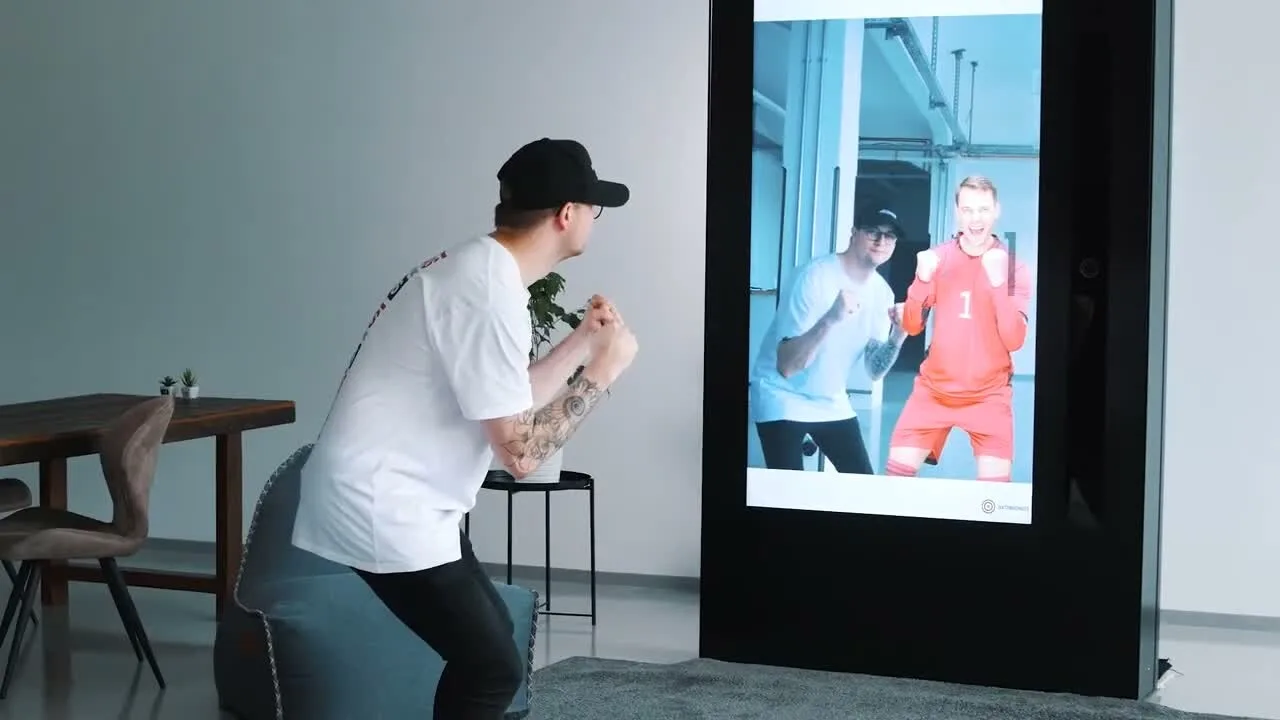
A photo to share is the best advertising after the show. In the selfie booth, visitors pose next to your mascot, your brand ambassador or your product. They scan a QR code, get the picture on their smartphone and share it on social media. Your logo travels along, into every profile.
With Selfie X, we built exactly that for adidas: fans pose next to national team players like Manuel Neuer and Leon Goretzka, the picture looks deceptively real, and on request it becomes a T-shirt.
For the Kaufhaus STOLZ department stores, there is a photo booth inside the VR headset, with a selfie of the user’s own avatar (case study).
How we do it: Get in touch and we will show you Selfie X.
9. The trade show for everyone who could not make it
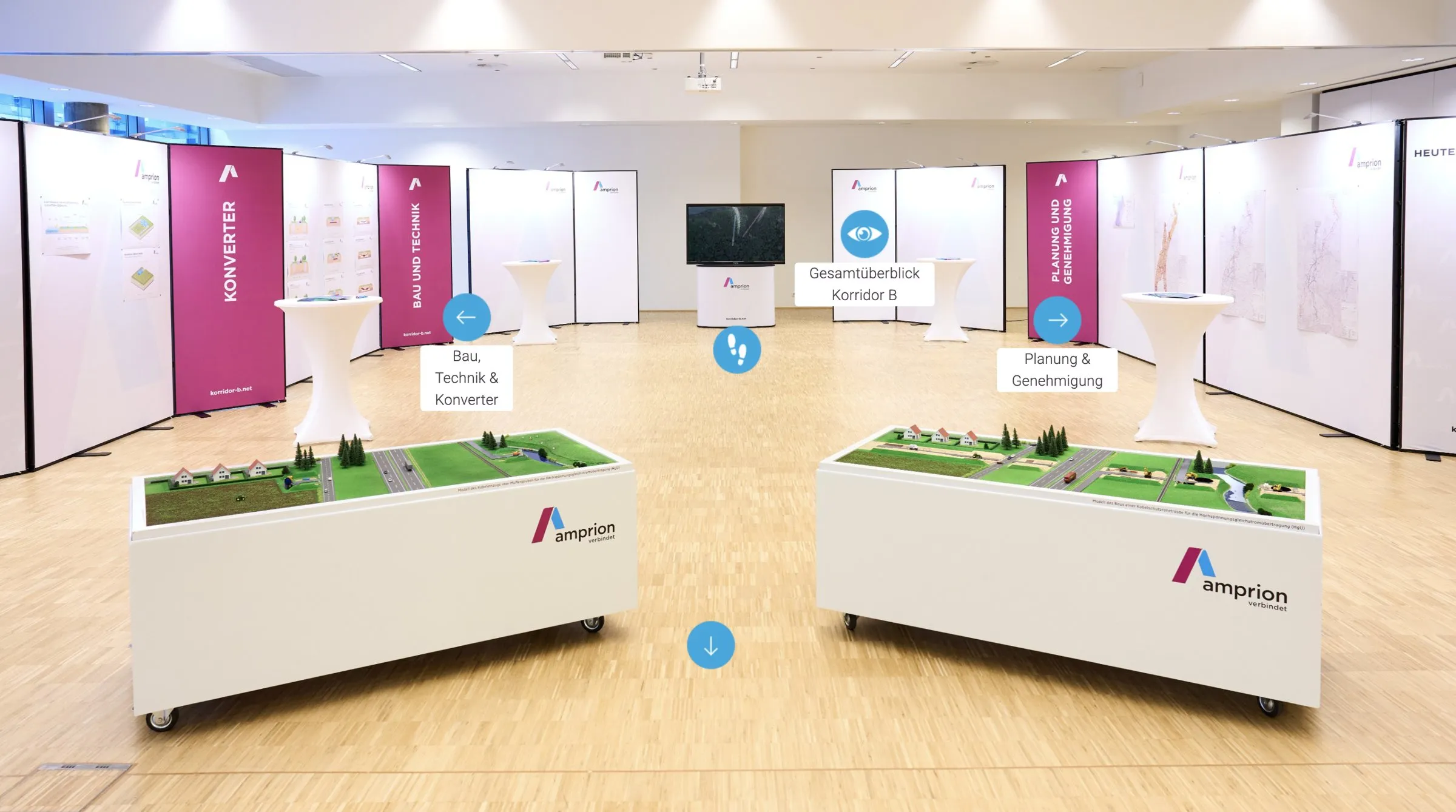
The key decision-makers are rarely all at the show. A 3D showroom brings your booth to them: in the browser, via a link, from anywhere. This is how Amprion made in-person events hybrid (case study). With Link & Show, you present what was on display at the booth during a conversation, even weeks later.
This is how Böllhoff works: we operate an extended 3D trade show booth online for the company. After the show, the sales team uses it to go into more detail on the products with their leads, by phone and on video calls. Both sides look at the same thing and experience the product together.
How we do it: 3D showroom
How to plan your visitor magnet
Combine: The strongest booths combine two or three ideas. The 3D display or the AI character pulls people in from the aisle, the VR headset, the game or the configurator keeps them at the booth, and AR, selfie and showroom carry the contact home. Everything is built from the same 3D data.
Lead time: Plan for the production time plus four weeks of buffer for acceptance and briefing your booth staff. A 360° video takes 2 to 6 weeks, VR built from prepared modules 4 to 10 weeks, an interactive simulation 6 to 12 weeks. More on this: When do I need to commission a VR project so it is ready for the trade show?
Space and staff: Each VR headset needs at least 1 by 1 meter, better 2 by 2 meters (about 3 by 3 feet, better 6.5 by 6.5 feet). One headset handles eight to twelve visitors per hour, and one person dedicated to the VR headsets can look after up to five of them. A 3D display or touchscreen only needs its own footprint. The math: VR headset at the trade show booth: process, staff and space
After the show: Plan from the start where your highlight will keep running afterward: on your website, in sales, in training. Spread across several trade shows and your sales team, the investment pays off much faster.
Capture contacts: Decide in advance how you will record conversations in a privacy-compliant way.
All ideas at a glance
| Idea | No headset needed | Keeps running after the show | Learn more |
|---|---|---|---|
| 3D display with product or character | yes | in the showroom, in the shop window | 3D display without glasses |
| Talking AI character | yes | at reception, at events | AI avatar |
| VR headset and mixed reality | no | in sales, in training | VR at trade shows |
| Touchscreen with product or game | yes | on your website | 3D showroom |
| Configurator on a tablet | yes | on your website and in sales | 3D configurator |
| AR via QR code | yes | with your customers | Augmented reality |
| Selfie with mascot | yes | on social media | Contact |
| 3D showroom via link | yes | in sales | 3D showroom |
Conclusion
The best trade show booth ideas let visitors experience something for themselves. A 3D display or a talking character stands out from the aisle, a VR headset, a game or the configurator keeps people at the booth, and AR, selfie and showroom carry your product into offices after the hall closes. We are happy to work out with you which ideas fit your booth and your date: VR at trade shows and events.