
Virtual reality at trade shows: How immersive technologies are changing trade show presence
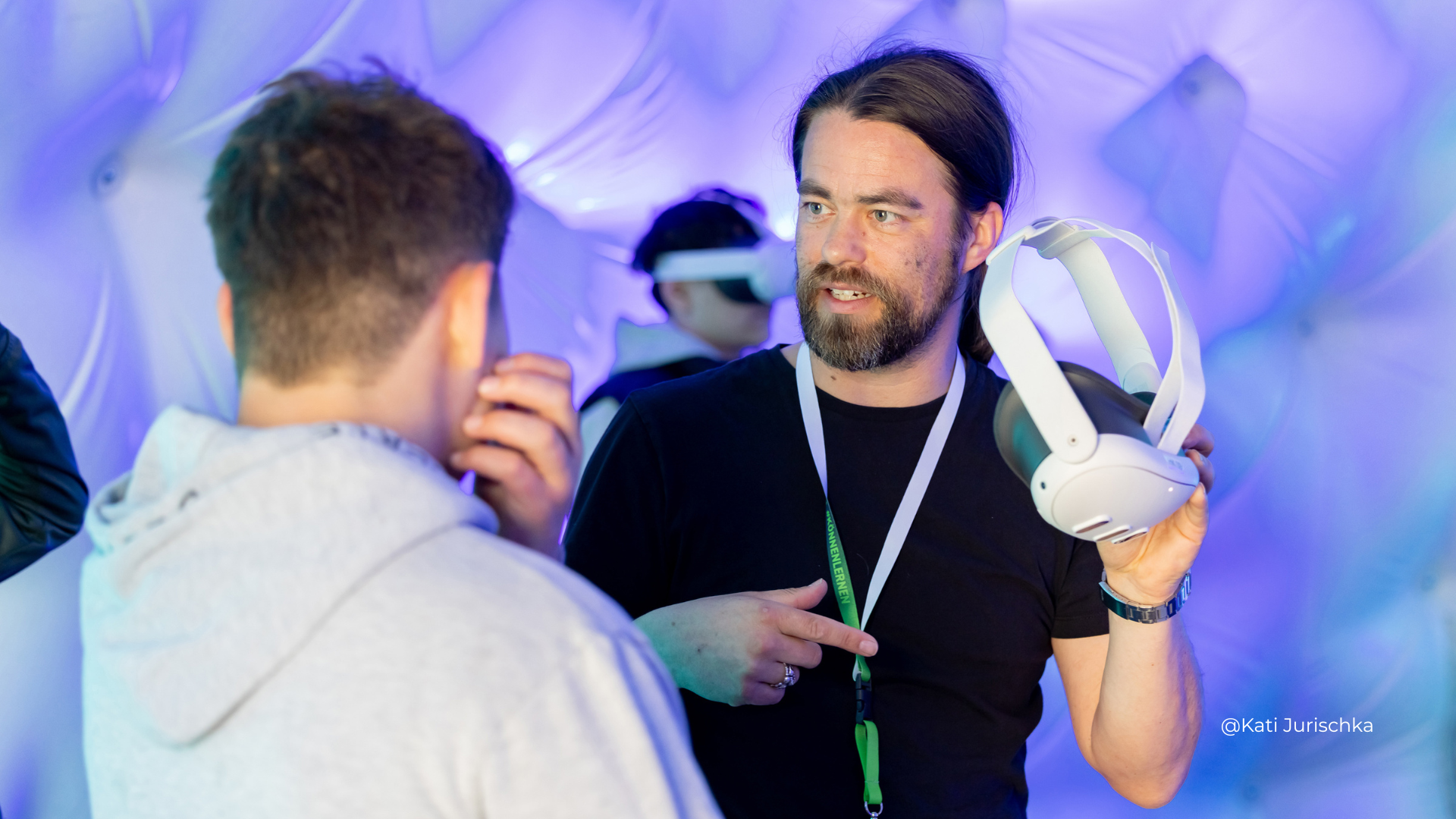
Virtual reality brings to the booth what has no room there: machines weighing several tons, entire production halls or workplaces that visitors would otherwise never see. With a VR headset, they can be walked through and operated. This turns the eye-catcher into the start of a conversation.
Trade shows thrive on personal exchange, on conversations and on letting people experience products and services firsthand. At the same time, companies face a challenge: complex products, large installations or hard-to-access work environments can only be presented to a limited extent on a limited booth space.
Extended reality (XR) opens up new possibilities here. With a VR headset, visitors can enter virtual spaces, view products from different perspectives or experience situations that could not be recreated at the booth itself. With smart glasses, projections can be placed in real space, and visitors can interact with AI avatars.
XR should not be understood merely as a technical eye-catcher. Used correctly, the technology can help convey information more vividly, make complex content easier to understand and add an interactive layer to a trade show presence.
What does extended reality mean at a trade show?
Extended reality creates a fully or partially digital environment that users can immerse themselves in with a VR headset or AR glasses. Unlike with a conventional screen, the environment is not just viewed but, depending on the application, can also be explored interactively.
For the trade show context, this means that content that would normally have to be shown in images, videos or physical models can be implemented as a virtual experience. The range extends, for example, from a virtual tour of a production facility to interactive 3D product models, simulated application scenarios or virtual work environments.
Why XR is interesting for trade shows
A classic trade show booth is limited in space. At the same time, it is supposed to convey as many products, pieces of information and impressions as possible. This can become a problem, especially with products that are large or need explaining. Booth costs also rise with every additional square meter.
Virtual reality can partly remove this spatial limitation. A virtual model can, for example, be much larger than the exhibit actually on site. Places hundreds or thousands of kilometers away can also be visited virtually from the booth.
The most important uses include:
- virtual tours of production facilities, buildings or work areas
- interactive 3D product presentations
- virtual product configurations
- simulations of work and application scenarios
- virtual training and learning environments
- recruiting and career orientation
- immersive brand worlds and experiences
- consulting and explanations by AI avatars or in audio and video formats
This allows XR to serve both to convey information and to stage a trade show presence emotionally.
Presenting complex products more clearly
Virtual reality is particularly interesting for products and services that are hard to explain with brochures, videos or physical models. One example is a technical machine with numerous components. Instead of only showing a finished product, a VR application can visualize how the system is built. Individual components can be highlighted, functions animated and different perspectives displayed.
Processes can also be made understandable virtually. Visitors can, for example, watch a production sequence or be guided step by step through an application. Interactive elements play an important role here. Instead of just watching, users can select certain content themselves and thereby influence the course of the experience.
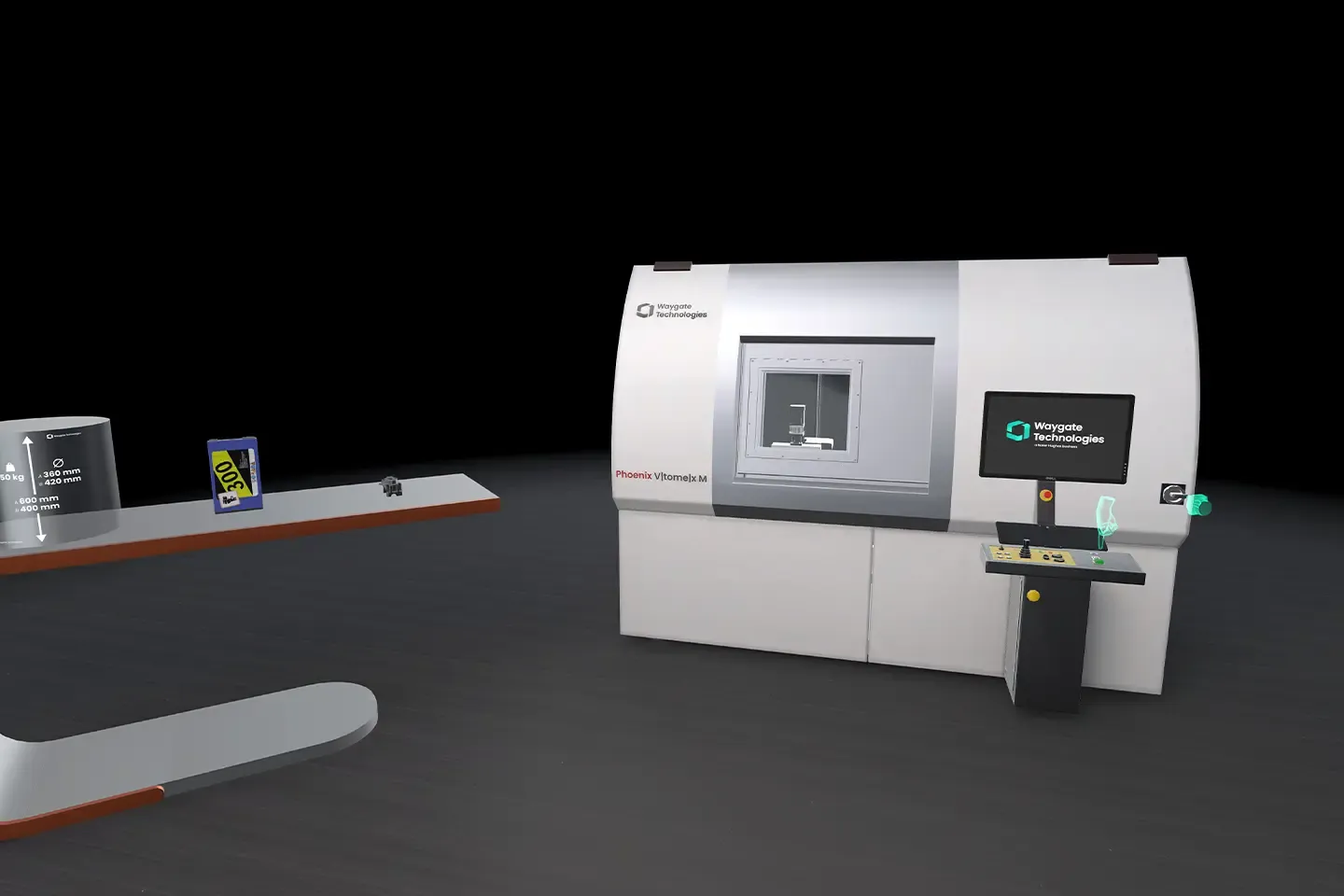
A concrete example is the VR application that VRtual X developed for Waygate Technologies. Among other things, the company manufactures large X-ray systems for non-destructive testing. The machines can weigh several tons and are correspondingly difficult to transport. Instead of bringing the complete systems to every trade show, they were recreated virtually and can be presented and operated interactively with a VR headset.
Visitors can, for example, position samples virtually and try out various operating steps themselves. This not only makes the size and functionality of the machine easier to understand but also allows a hands-on product demonstration without having to set up the real system at the booth.
Case study: Waygate: virtualizing machines with VR
Experiencing places that aren’t at the booth
Another advantage lies in the ability to reproduce real places virtually. A production hall, a laboratory, a logistics center or a construction site cannot easily be presented at a trade show booth. With 360° footage, 3D models or a combination of different media, however, such environments can be made digitally accessible.
Different technical approaches are possible. An application can, for example, be based on real 360° footage or use a fully computer-generated 3D environment. Hybrid forms are also possible.
This gives companies the opportunity to offer visitors insight into areas that are normally not open to the public.
XR as an experience factor
Trade shows are not just information events. Attention and interaction also play a central role. A VR headset, or even lighter AR glasses, can serve as a way into a conversation. The immersive experience differs significantly from classic presentation formats and can motivate visitors to engage more intensively with a topic.
An XR application does not necessarily have to be complex. A short, clearly structured experience can also work if it is focused on a specific message. What matters is therefore less the technical complexity than the question of what purpose the application should serve.
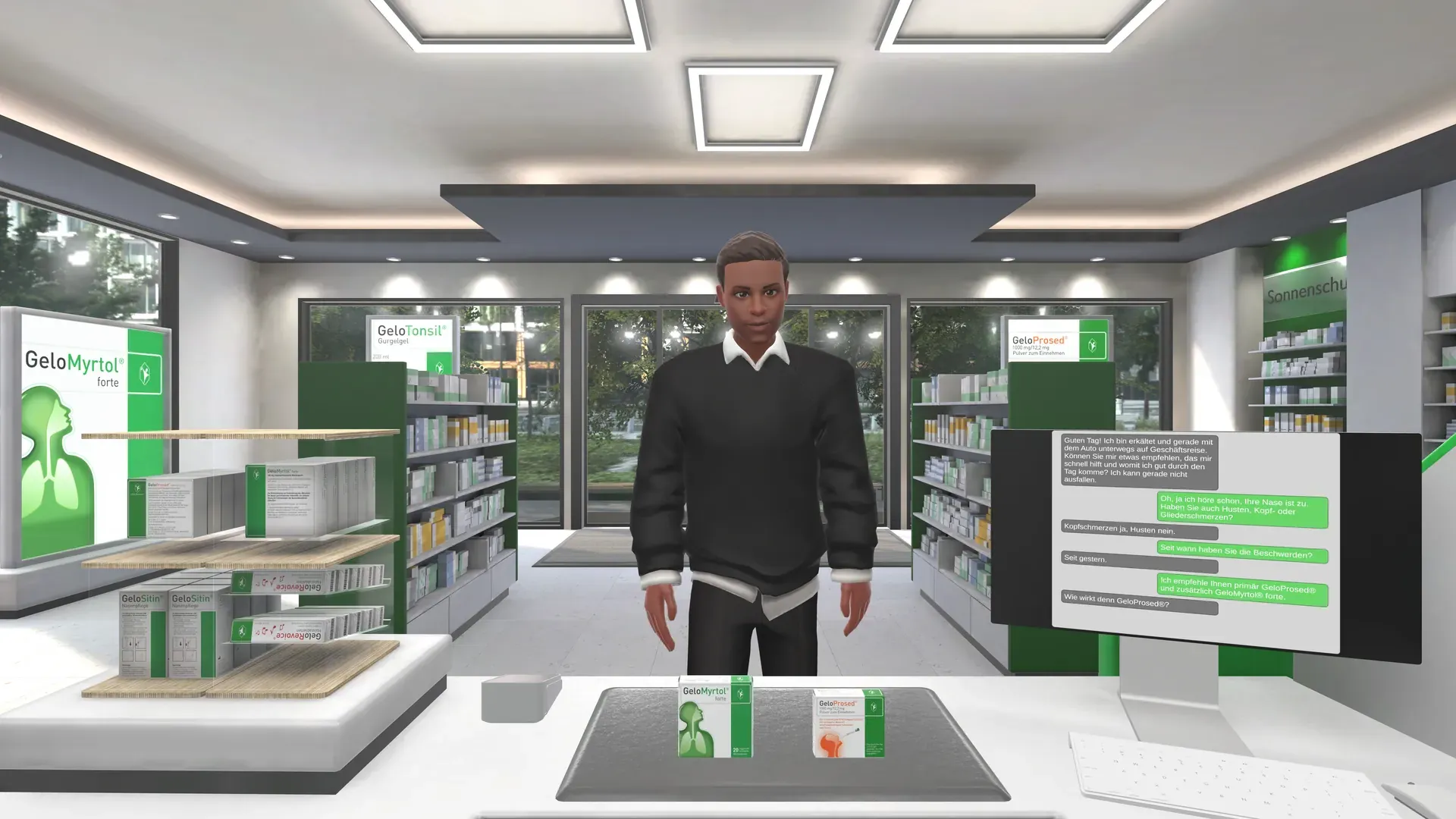
A project for Pohl-Boskamp shows that a VR application can also work as a crowd puller at a trade show booth. Here, a virtual pharmacy was created as an interactive VR application. Visitors can explore the virtual environment and engage with the content in a playful way. The example shows that a VR application at a trade show does not have to serve only as a classic product presentation. Gamification can also help attract attention and actively involve visitors in the experience.
Case study: Pohl-Boskamp: gamification at the trade show booth
From product presentation to recruiting
The possible uses are not limited to sales and marketing. At career fairs, for example, VR can provide insight into work environments. Interested visitors can explore virtual workplaces or get to know typical tasks. Especially where the actual workplace is not easily accessible, this can offer an additional perspective on the job.
VR can also be used for career orientation. Virtual work environments can let young people get to know different career fields immersively without having to visit a real workplace right away. One example is the Virtuelle Hanseatische Lehrstellenbörse (VHLB), a virtual apprenticeship fair in which companies can present their various apprenticeship programs with interactive experiences.
In addition, immersive applications can be used for training and continuing education. Complex procedures can be simulated and performed repeatedly without needing a real environment each time. VR can also be used for recruiting directly at trade shows. ISOTEC Itzehoe, for example, uses 360° videos to give interested visitors an authentic look at the company and its working world. At career fairs, visitors can get to know different areas within a few minutes without having to visit the actual workplace.
The advantage is not just the attention it draws. An immersive insight can serve as a conversation starter and ensure that interested visitors engage more intensively with the company even before the personal conversation.
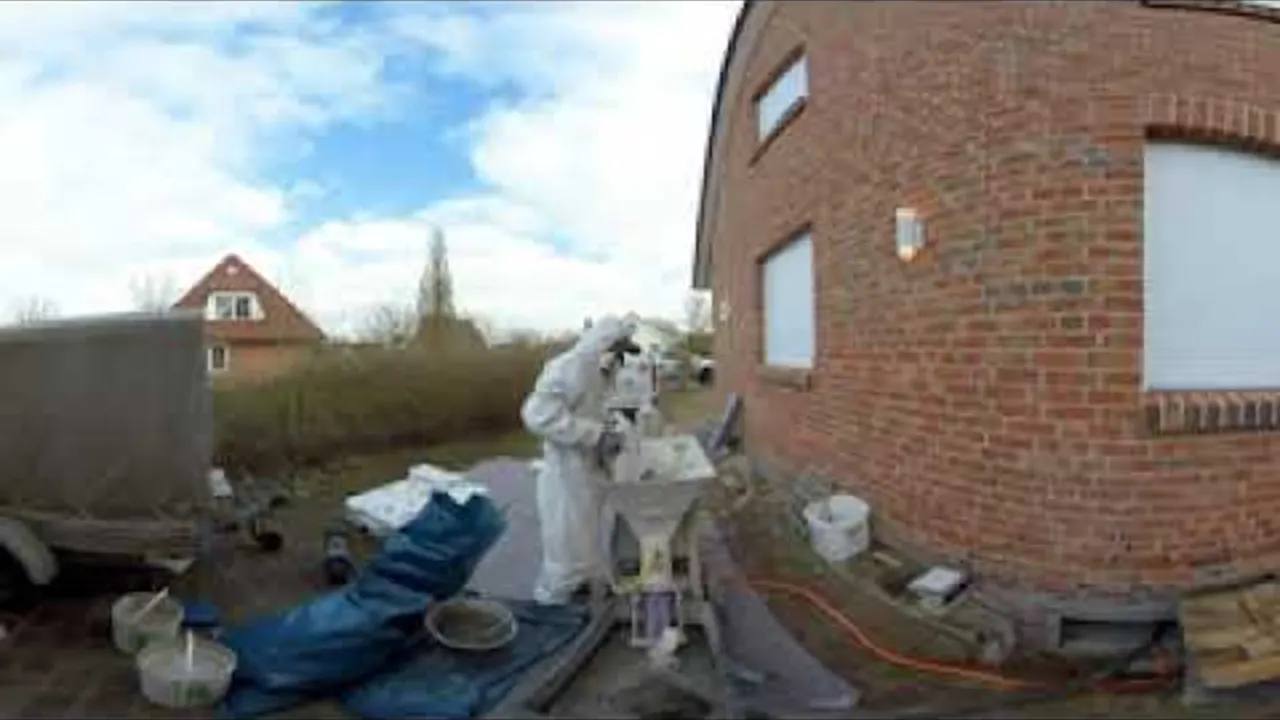
Case study: ISOTEC: 360° videos at career fairs
SemiQuarz takes this approach a step further in terms of interactivity. There, VRtual X combines 360° videos with interactive job simulators. This allows interested visitors not only to get to know the company and its workplaces but also to try out simplified versions of tasks such as hot glass working or operating milling machines themselves.
This approach can be especially interesting for little-known occupations or ones that are hard to explain: instead of just talking about a job, interested visitors can get a first impression of what the work might feel like.
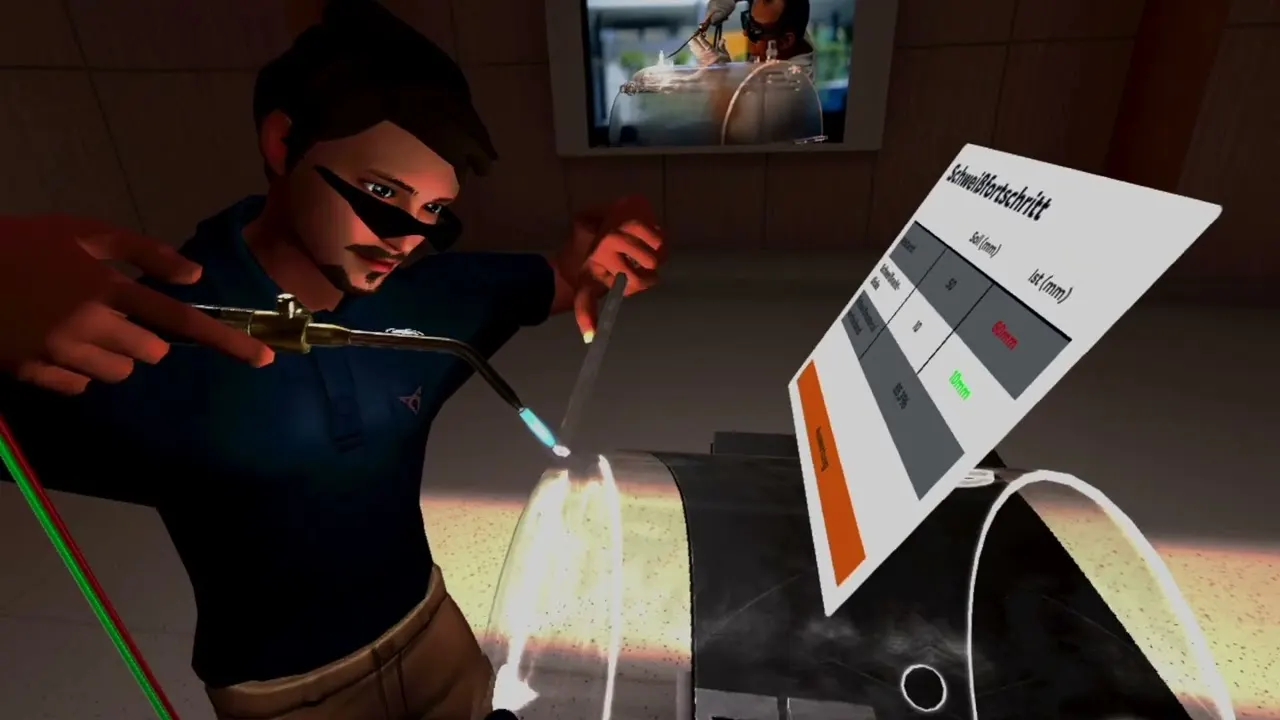
Case study: SemiQuarz: recruitment and company presentation in virtual reality
Not every VR application has to be built the same way
Virtual reality is not a single format. Depending on the goal, different technical approaches can make sense.
360° VR
In 360° applications, real environments are recorded with special cameras. Users can then look around in the recording. This approach is suitable, for example, for virtual tours or authentic insights into real work environments.
3D and real-time VR
Another option is to create the environment entirely in 3D. This allows objects and spaces to be designed interactively. One advantage is that products can be modified, animations integrated or complex procedures simulated.
Hybrid applications
A combination of different media is also possible. 360° videos, 3D models, animations, images, text and audio can be combined within one experience. Which option makes sense therefore depends heavily on the goal, the available data and the desired level of interaction.
What do you need for VR at a trade show booth?
The technical setup involves more than a VR headset. First, the booth needs suitable hardware. Modern standalone VR headsets can run without a powerful computer and without a cable connection.
The software is just as important. The application should be as intuitive as possible, since many trade show visitors have no experience with VR. Clear navigation and a short introduction can therefore be decisive. The conditions at the booth should also be taken into account. These include, for example:
- enough space for the VR station
- staff to support and brief visitors
- regular cleaning of the headsets
- a reliable power supply
- a way to show the VR content on an external screen
- an offline version or a reliable internet connection
- multiple language versions, if needed
The internet connection in particular should not be underestimated. If an application works entirely online, an unstable connection at the trade show can impair the experience. A locally available version can reduce this risk.
Staff support remains an important part
Even though VR can convey a lot of information on its own, the technology does not automatically replace personal communication. A VR station should therefore be integrated into the overall concept of the booth. Staff can help visitors use it, answer questions and then follow up directly on the virtual experience.
This is particularly relevant when the VR application is not just meant to entertain but to convey specific information about a product, a job or a service. VR therefore works best as a complement to the personal conversation, not as a complete replacement for it.
Even with a VR application that runs largely on its own, integrating it into personal contact remains relevant. The recruiting project for SemiQuarz shows this, for example. The VR application first takes over part of the information delivery and gives interested visitors insight into the company and its occupations. The staff can then concentrate on more specific conversations about apprenticeships, internships or possible employment.
VR does not replace the conversation. Instead, it can ensure that the conversation starts from a more informed basis.
From a single VR experience to a virtual showroom
An interesting perspective emerges when an application developed for a trade show does not disappear after the event ends. Virtual content can also be used on websites, in digital showrooms or in sales and recruiting activities, for example. This can turn a trade show application with a limited lifespan into a permanently usable digital offering.
Virtual trade shows can also be developed further beyond this approach. Virtual recruiting platforms or digital showrooms that are accessible independently of the actual trade show date are conceivable, for example. This changes the role of VR: a one-time trade show highlight can become a reusable digital communication building block.
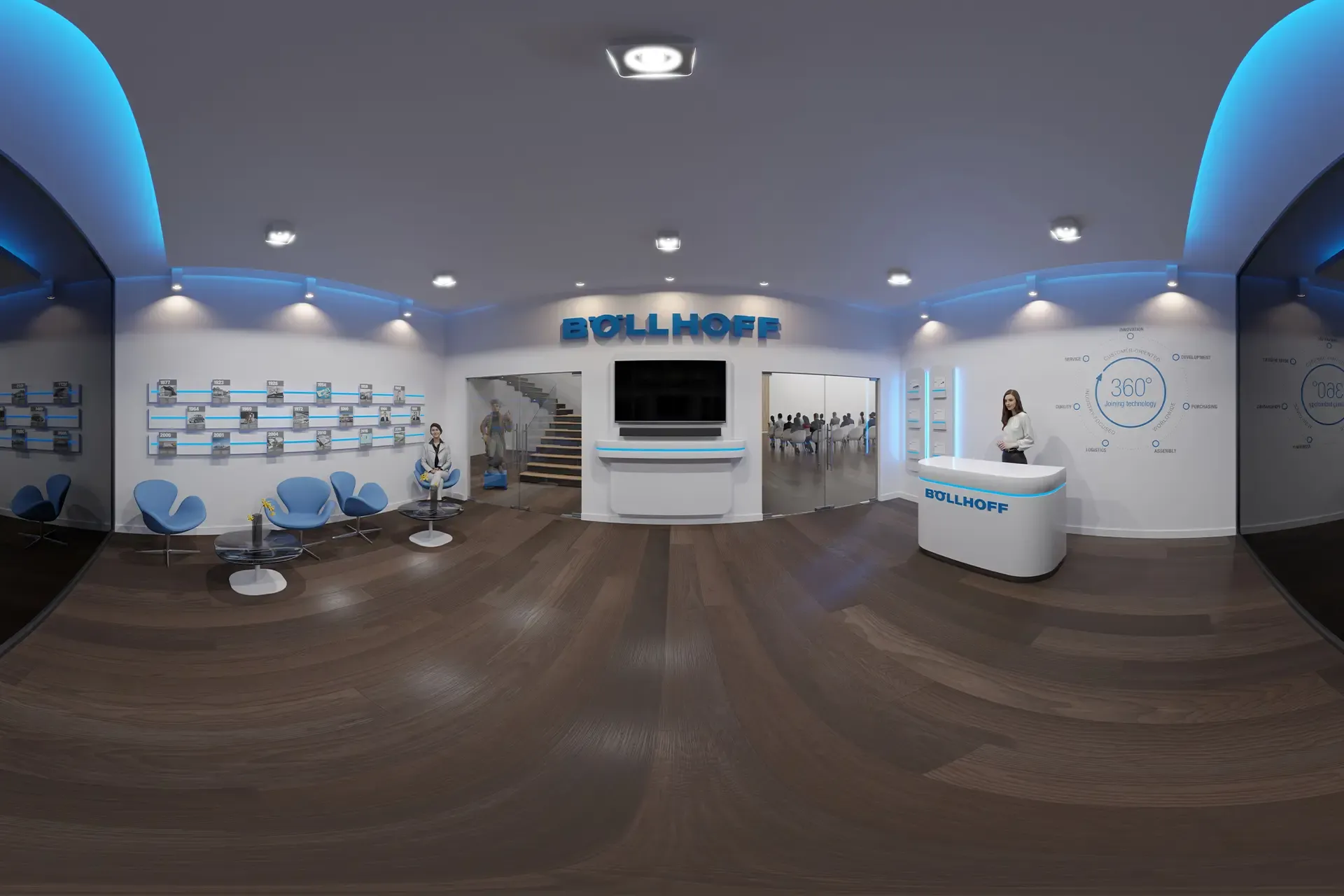
The Böllhoff virtual showroom shows that virtual content can be used beyond a single trade show. The showroom was originally developed as a digital alternative to in-person events and has since become a permanent part of the company’s communication.
Prospects and existing customers can engage with products interactively there and explore the virtual environment together with Böllhoff staff. The case thus highlights an important aspect of planning XR projects: content does not necessarily have to be developed exclusively for a single trade show appearance.
Depending on how it is built, a virtual product presentation designed for a trade show can later also be used for sales appointments, digital events or as part of a virtual showroom, for example.
Case study: Böllhoff: virtual showroom for interactive product presentation
Virtual trade shows are not the same as VR at the booth
In the context of virtual reality at trade shows, it is worth distinguishing between the terms. A virtual trade show takes place entirely digitally and can be visited, for example, on a regular computer or in a browser. Such platforms can be built as classic 2D web environments or work as a 3D world.
2D trade shows often feel similar to a website in how they are used. 3D and 360° trade shows, by contrast, can convey a stronger sense of space. Real-time 3D environments go one step further and allow, for example, a virtual environment to be explored together through avatars. VR at a physical trade show booth takes a different approach: the real trade show remains, and it is complemented by an immersive digital experience. The two concepts can, however, be combined. One example of combining a virtual platform with a real event is the Virtuelle Hanseatische Lehrstellenbörse (VHLB), which VRtual X developed together with the Handelskammer Hamburg (Hamburg Chamber of Commerce).
The VHLB is not a classic online trade show that is visited only through a browser. Instead, the virtual apprenticeship world is brought to schools and apprenticeship fairs with VR headsets. There, students can get to know apprenticeship occupations through 360° videos, interactive content and simulations.
This creates a hybrid concept: the real trade show or school visit remains but is complemented by an immersive digital layer. The VR headsets act as access to a virtual apprenticeship world that can be experienced regardless of where the respective company is actually located.
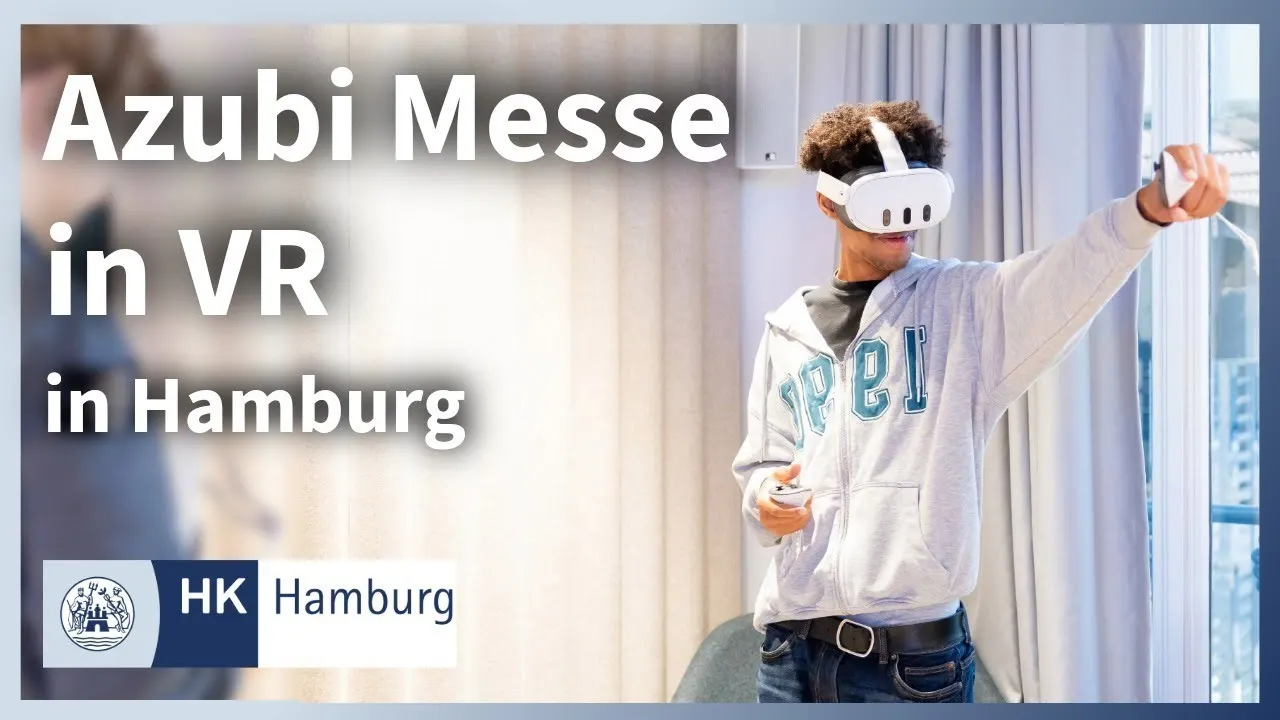
Case study: Virtuelle Hanseatische Lehrstellenbörse: VHLB
The Handelskammer Hamburg also describes the VHLB as a complement to the in-person fair held every year. The VR headsets are used at schools and trade shows throughout the year.
Hybrid trade show concepts as a link between digital and analog
The experience of recent years has shown that digital trade show formats do not necessarily have to replace classic in-person events. Instead, the two worlds can be combined.
A company can, for example, use a VR application at an in-person trade show and then make the same content available online as a virtual showroom. Conversely, a virtual platform can reach interested people who cannot travel to the trade show in person. This creates a hybrid approach that connects physical encounters with digital experiences.
The VHLB shows particularly clearly what such a hybrid concept can look like. The classic Hanseatische Lehrstellenbörse continues to take place as an in-person event. At the same time, the virtual content can be used at other locations throughout the year. This also changes the time dimension of a trade show presence: while a classic booth is only available during the event, virtual content, once developed, can then be used at further events, school visits or other recruiting touchpoints. For the VHLB, career guidance advisors from the Chamber of Commerce handle the use of the VR headsets and bring the virtual apprenticeship world directly to schools and trade shows. VRtual X develops and maintains the technical platform.
More about the project: VHLB: Virtuelle Hanseatische Lehrstellenbörse
What companies should consider when planning
A successful VR application does not start with choosing a VR headset but with defining the goal. Before implementation, a few fundamental questions should therefore be answered:
- What should VR achieve? Attract attention, explain a product, support recruiting or make a brand tangible?
- Which content is suitable for immersive presentation? Not every piece of content needs VR. The technology is particularly interesting when spatial presentation, interaction or simulation offer concrete added value.
- How long should the experience last? At a trade show, short, easy-to-understand experiences often make more sense than very extensive applications.
- Who staffs the station? A good technical solution still needs a well-thought-out usage concept.
- Can the application be reused after the trade show? Reuse in sales, recruiting, marketing or on your own website can increase the long-term benefit.
- What technical environment is available? Space, power supply, internet connection, hardware and hygiene should already be considered when planning the booth.
Conclusion: VR can turn a trade show booth into an experience space
Virtual reality expands the possibilities of classic trade show communication. Products can be presented regardless of their actual size, hard-to-reach places visited virtually and complex processes conveyed interactively. Case studies such as the virtual presentation of large machines for Waygate or the interactive recruiting experiences for SemiQuarz show that very different approaches are possible.
The deciding factor is not the technology alone. A VR headset does not automatically make a trade show presence more successful. What matters is whether the application fulfills a specific communication goal and is meaningfully integrated into the overall trade show presence. Well-designed VR experiences can fulfill several functions at once: they attract attention, convey information, create interaction and open up new possibilities for product presentation, recruiting and brand communication.
With VRtual X, such immersive concepts for trade shows and other areas can be developed, from interactive product presentations and virtual work environments to custom 3D experiences. The various VRtual X projects show that such content does not necessarily lose its purpose when a trade show ends. It can then also be used for sales, recruiting, training, digital showrooms or other events.
This makes virtual reality not just a trade show highlight but a building block of long-term digital communication.