SemiQuarz
Recruitment and Company Presentation in Virtual Reality
For SemiQuarz, we developed a VR application with two job simulators and 360° videos. It brings the little-known trade of glass apparatus maker to life.
- Client
- SemiQuarz
- Industry
- Scientific glassblowing
- Use
- Recruiting and apprenticeships, Sales and marketing
- Format
- Virtual Reality
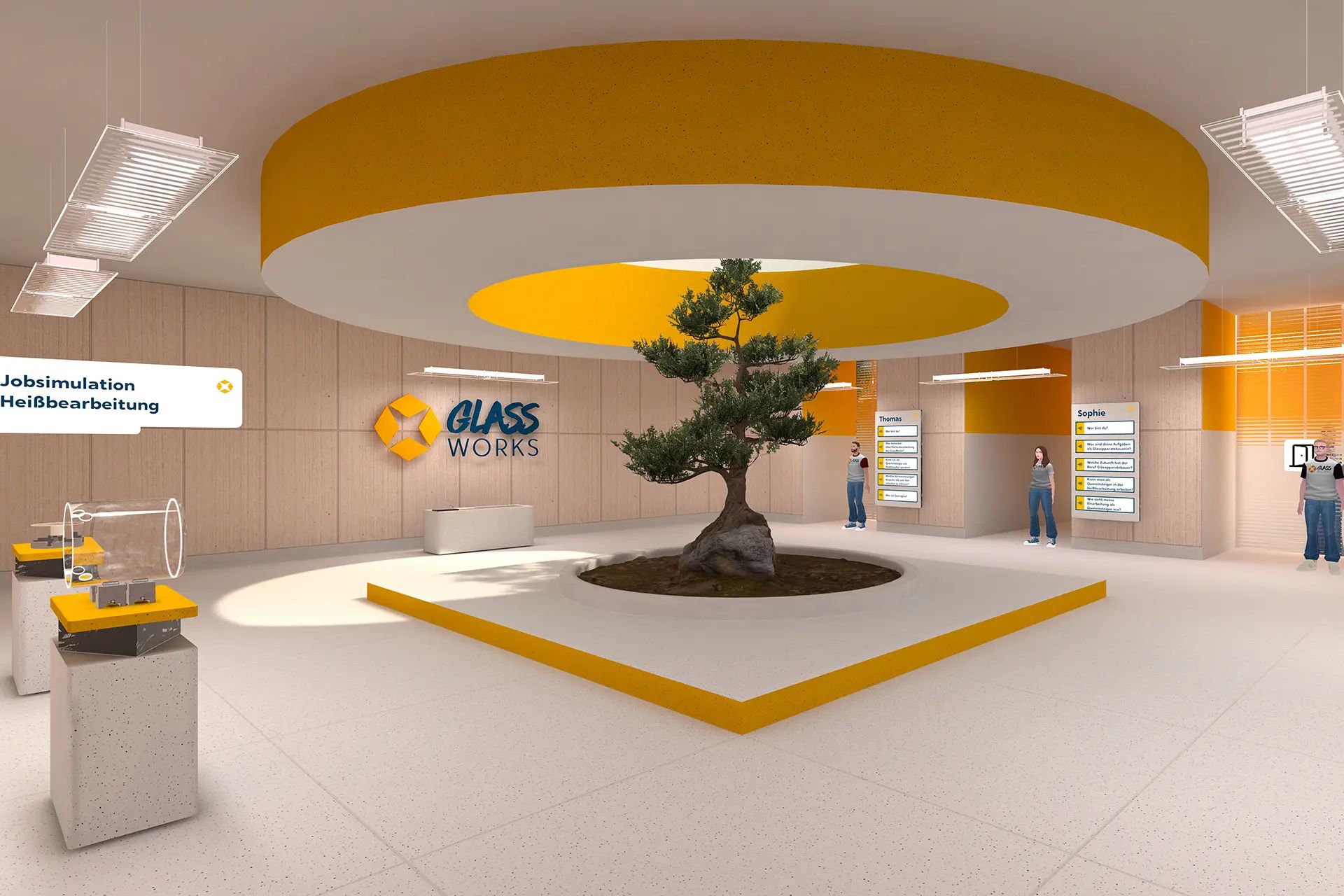
How do you recruit employees and apprentices for a job nobody has heard of and that isn’t easy to understand? That is exactly the challenge SemiQuarz faces. With an interactive Virtual Reality application and 360° videos, the company is now breaking new ground in recruitment.
Everyone has seen the round discs that microchips are made from. They are produced in machines built from quartz glass. Only a handful of companies manufacture these quartz glass equipment components. One of them is SemiQuarz, which has one site near Hamburg and one near Munich. Alongside machinists, the people working there are glass apparatus makers (a skilled trade in Germany that is similar to scientific glassblowing). The public hardly knows this profession exists. And that is a problem: you can’t apply for something you don’t know about.
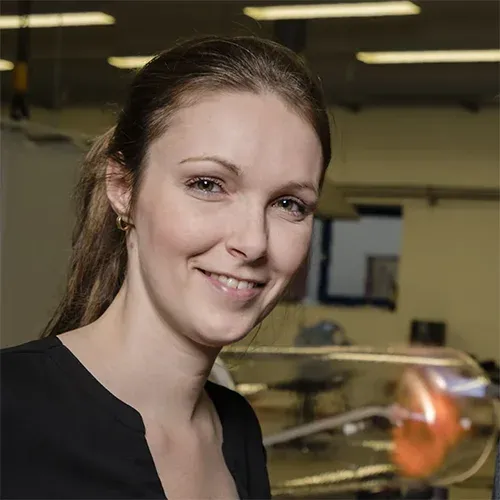
Ann-Dorothée Büsche, Managing Director at SemiQuarz: “The shortage of skilled workers is a big problem for us, too. But the biggest challenge is that hardly anyone knows the trades we offer apprenticeships in. School leavers and career changers don’t apply to us because they don’t know these jobs exist. And if they happen to come across them, they often imagine something completely different.”
SemiQuarz attends information events at schools and recruiting fairs. But young people are often too shy to approach the adults. They would rather go to booths where they can tell from a distance what to expect.
For Ann-Dorothée Büsche, this is where the first big advantage of Virtual Reality comes in: “Young people are often open to technology and are less hesitant about ‘digital gadgets’ than about adults they don’t know. That’s a huge advantage for getting young people to the booth.”
Drawn in by the VR headsets, visitors go straight on a trip into the SemiQuarz workshops and get to know the company, the colleagues, and the trade. After a few minutes in VR, Ms. Büsche and her team can talk with the young people directly about internships, apprenticeships, or permanent positions.
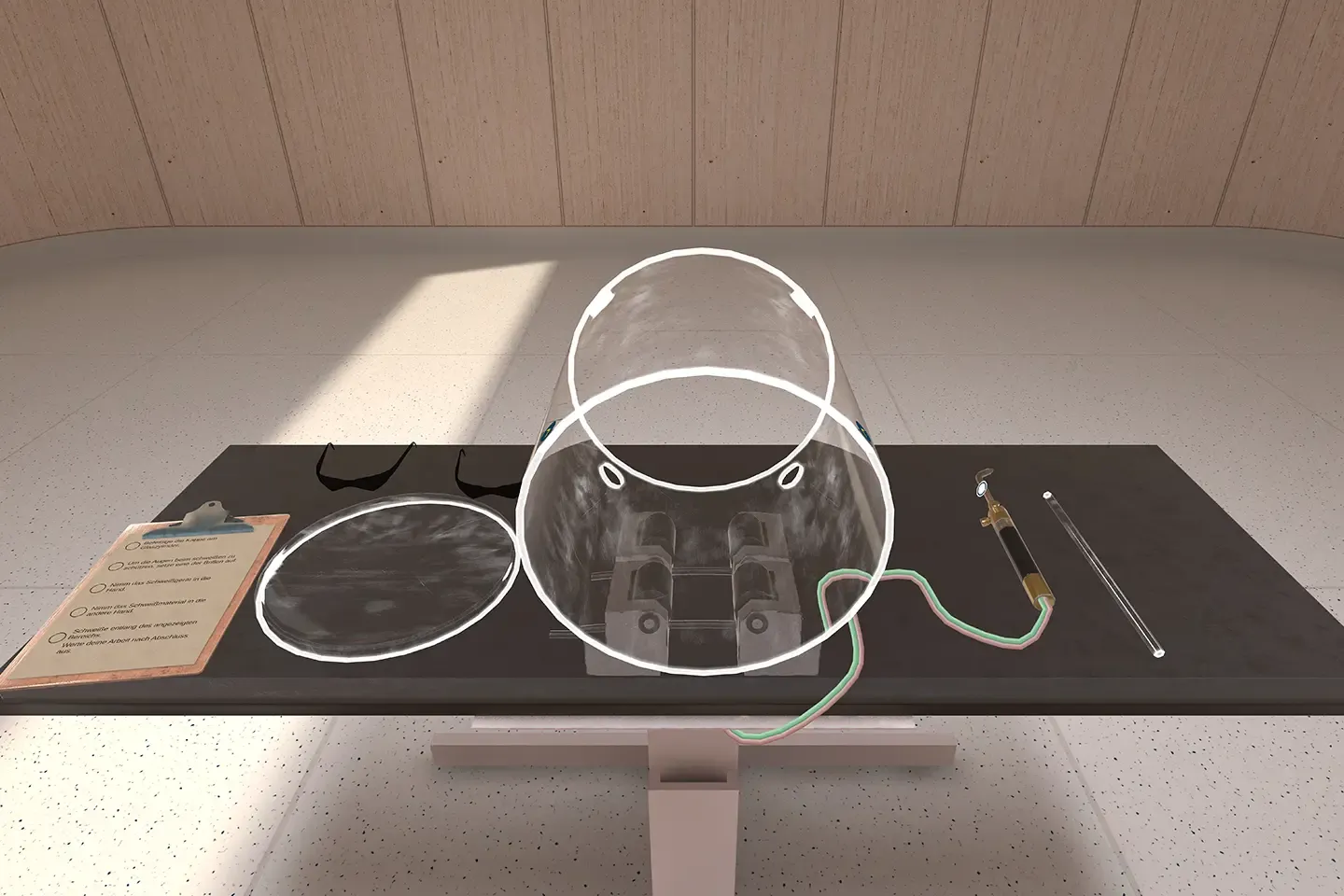
Trying out the job in a VR simulation
The Virtual Reality app “Glass Works” includes two job simulators:
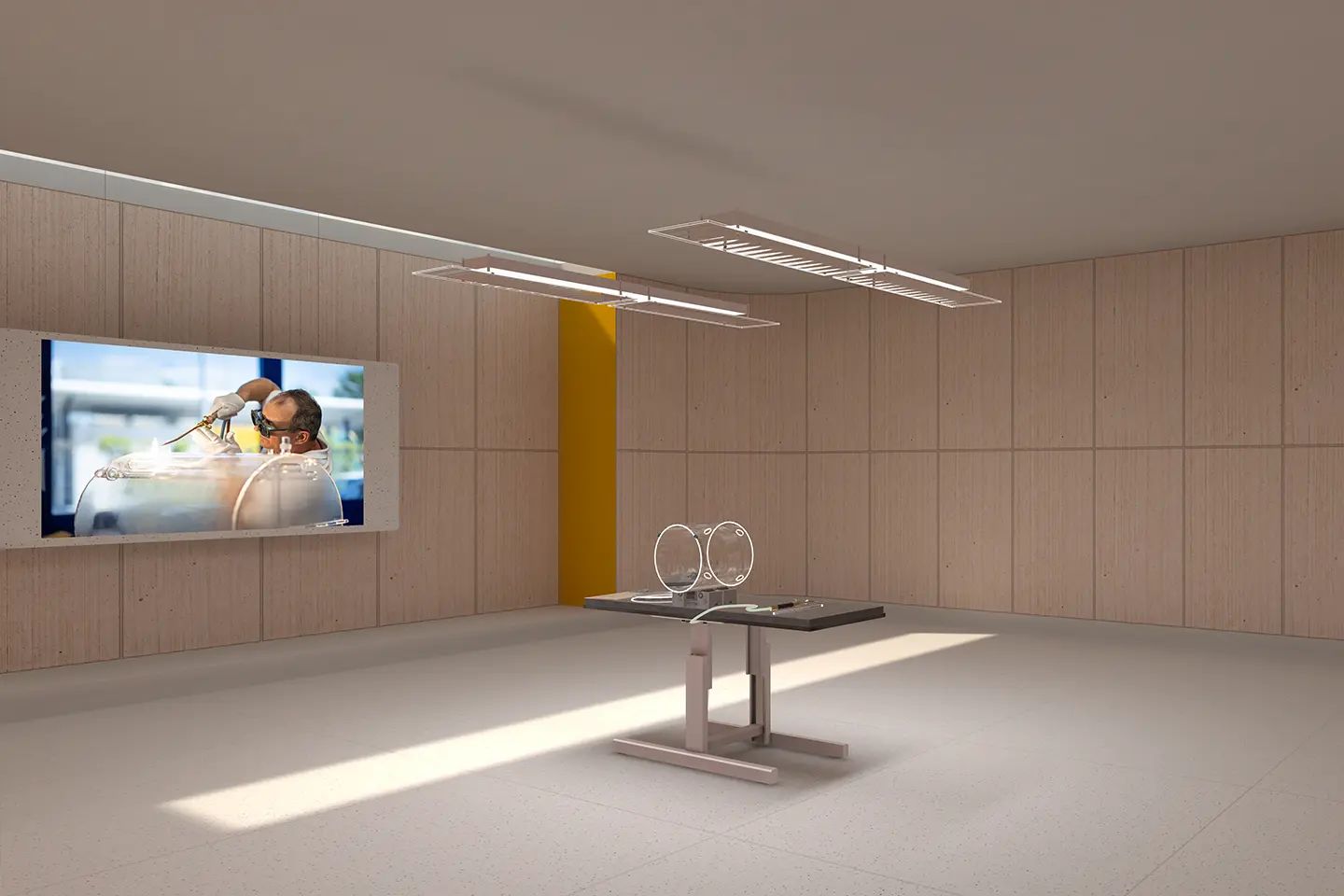
Hot working
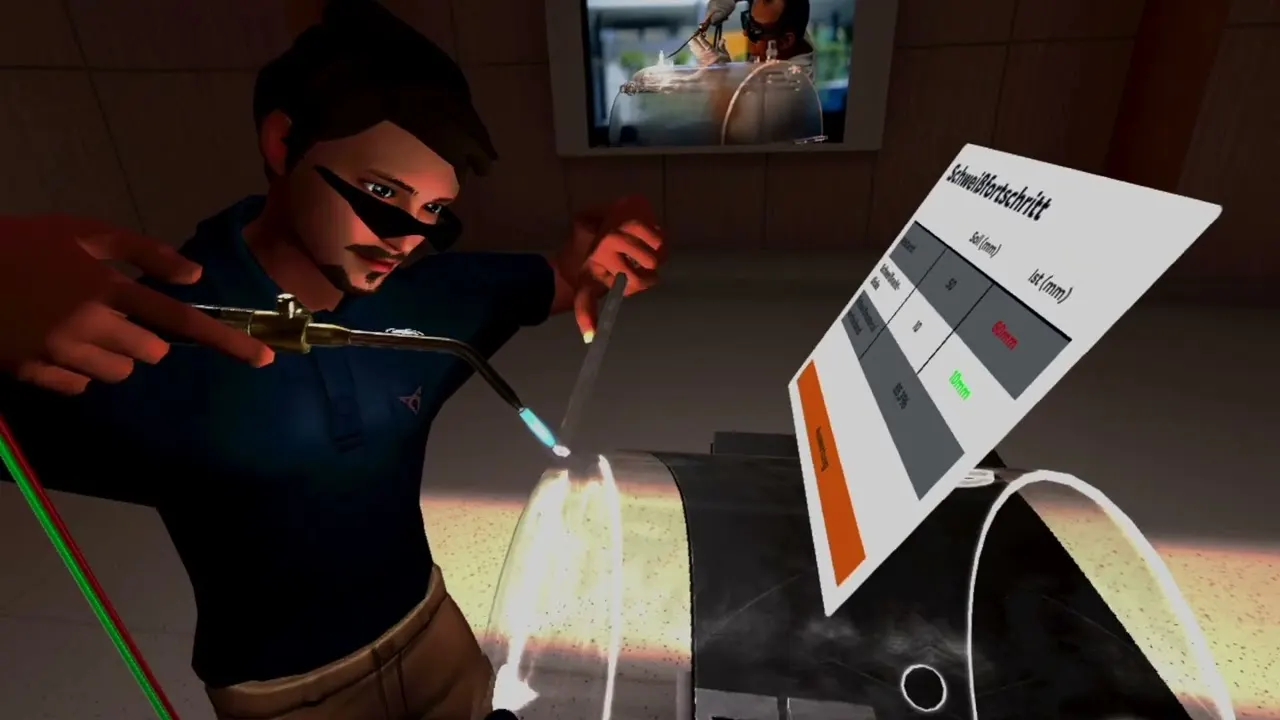
The first one covers “hot working” and simulates glass welding. You can complete this section alone or in pairs. First, you move the components into the correct position. Then you put on your protective equipment (in this case, welding goggles). Next, you carry out the actual welding with a gas burner and a glass rod. A small display shows how precisely you are working. At the end, you get an overall assessment of the quality of the weld.
This simulation has several advantages:
- Prospective applicants can get hands-on and get a feel for what it means to guide a roaring gas burner and work to the millimeter.
- We also designed the application to be so realistic that fine motor skills matter. It is a test of dexterity and patience at the same time, which shows whether the job is a good fit or not. Someone who already runs out of patience in the VR application is probably not right for the trade. But some people also discover a talent they never knew they had just by trying it out. So the simulation already helps with pre-screening prospective applicants.
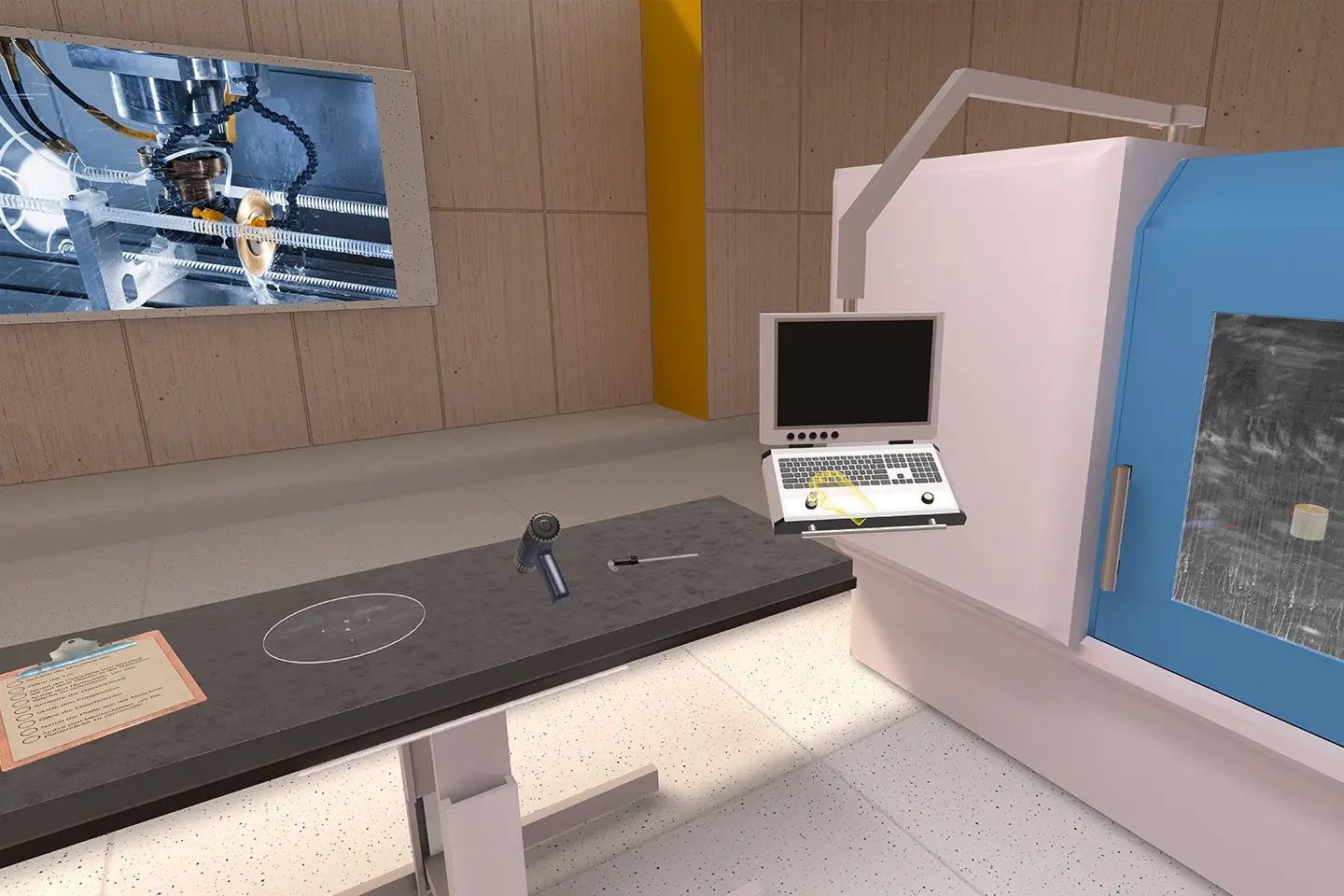
Machining
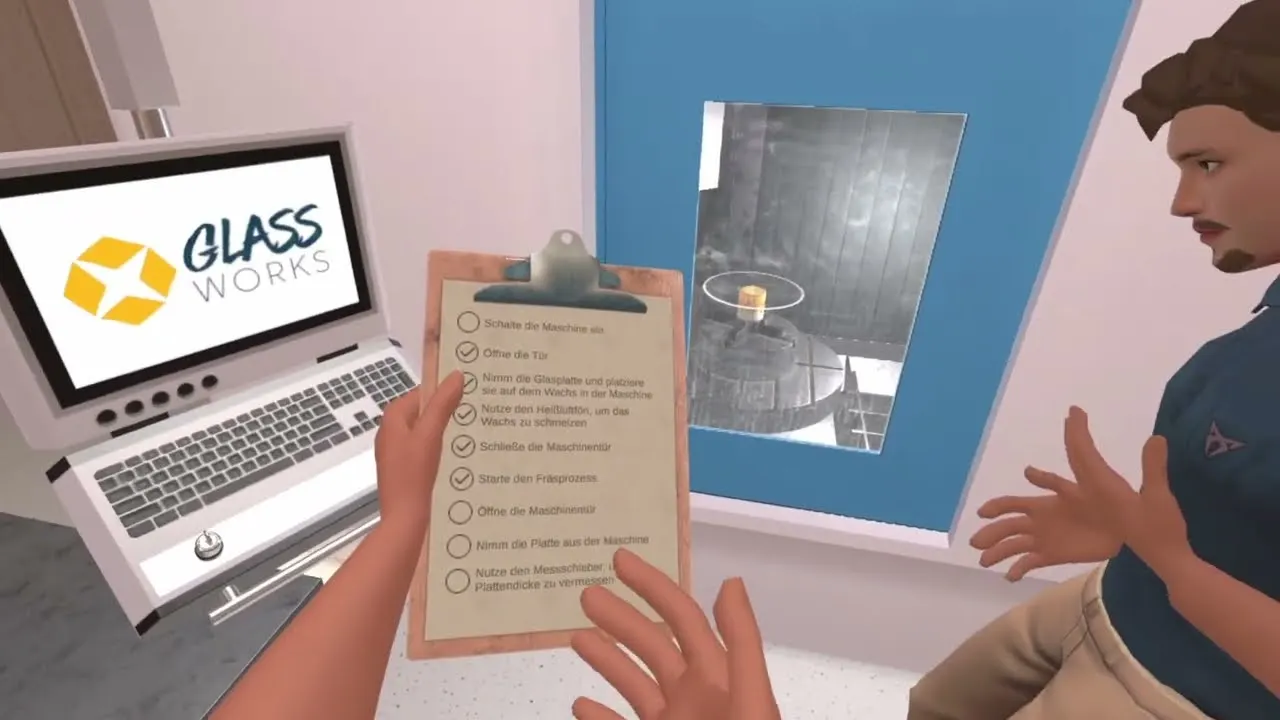
Understanding and practicing workflows: a second job simulator covers “machining.” This section trains people to work with large milling machines: switching on, loading material, programming, and final inspection. The simulator naturally simplifies the workflow a great deal, because at a trade show there isn’t time to show the whole process. A detailed, true-to-life version of the job would also be possible for onboarding and training and could be added at any time. In recruitment, the focus is on conveying a lot of information in a short time and, above all, a gut feeling for the work. Users should get an impression of what the job is about and, most importantly, take that impression home with them.
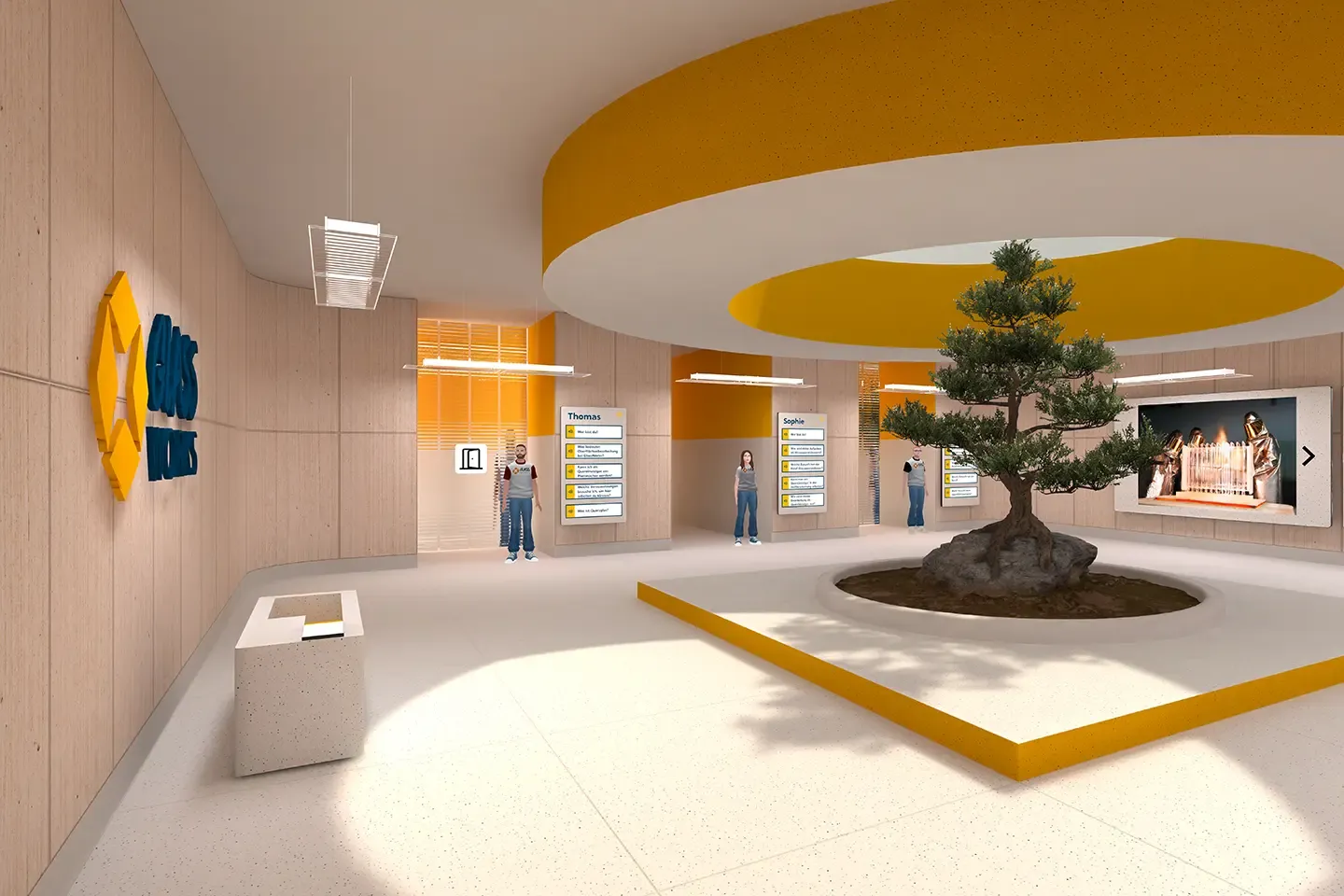
Visiting the company with 360° videos
The simulations described above are highly interactive. That helps explain complicated workflows, lets people try them out for themselves, and builds “muscle memory” (at home, you remember things you tried out with your whole body better than things you only talked about).
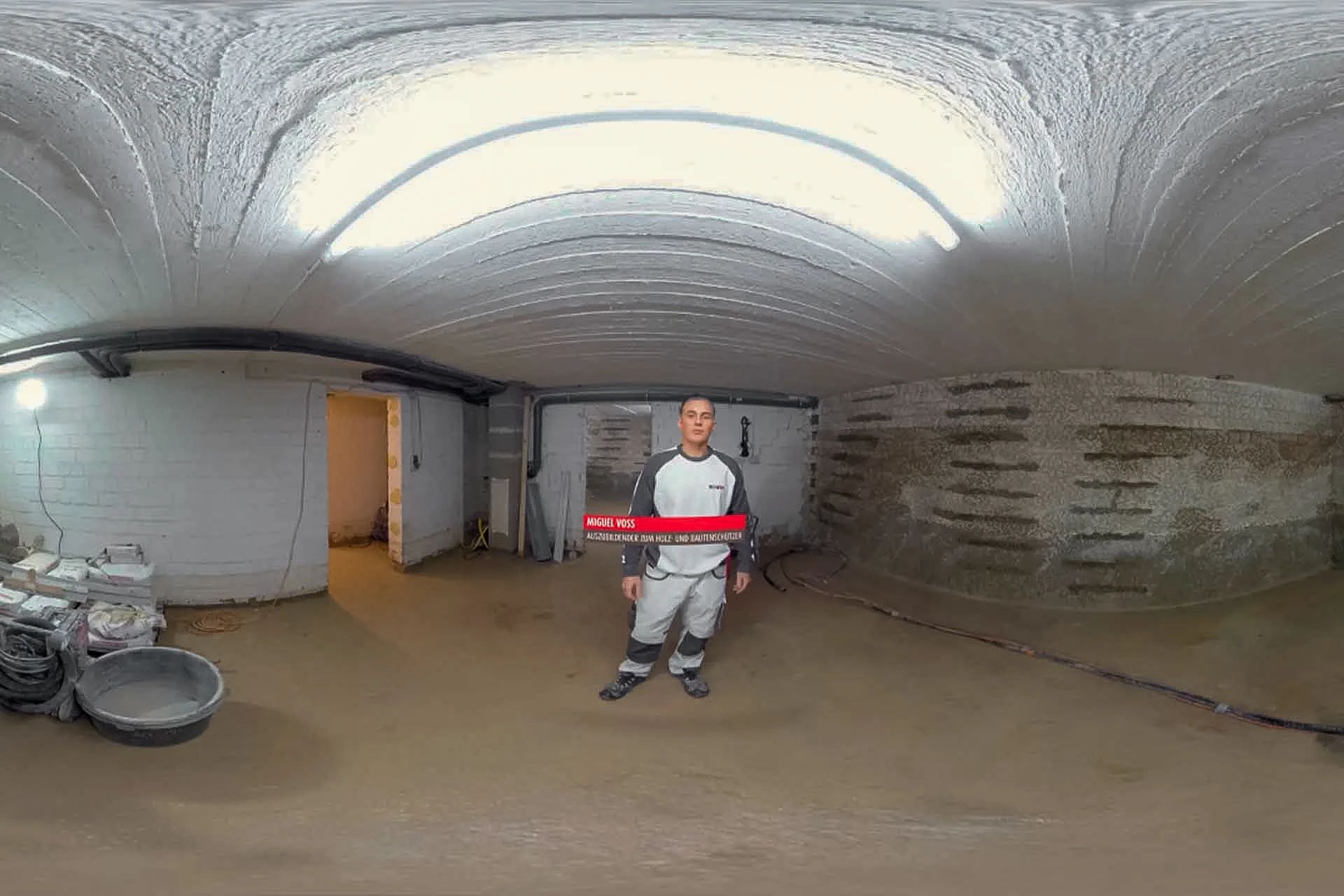
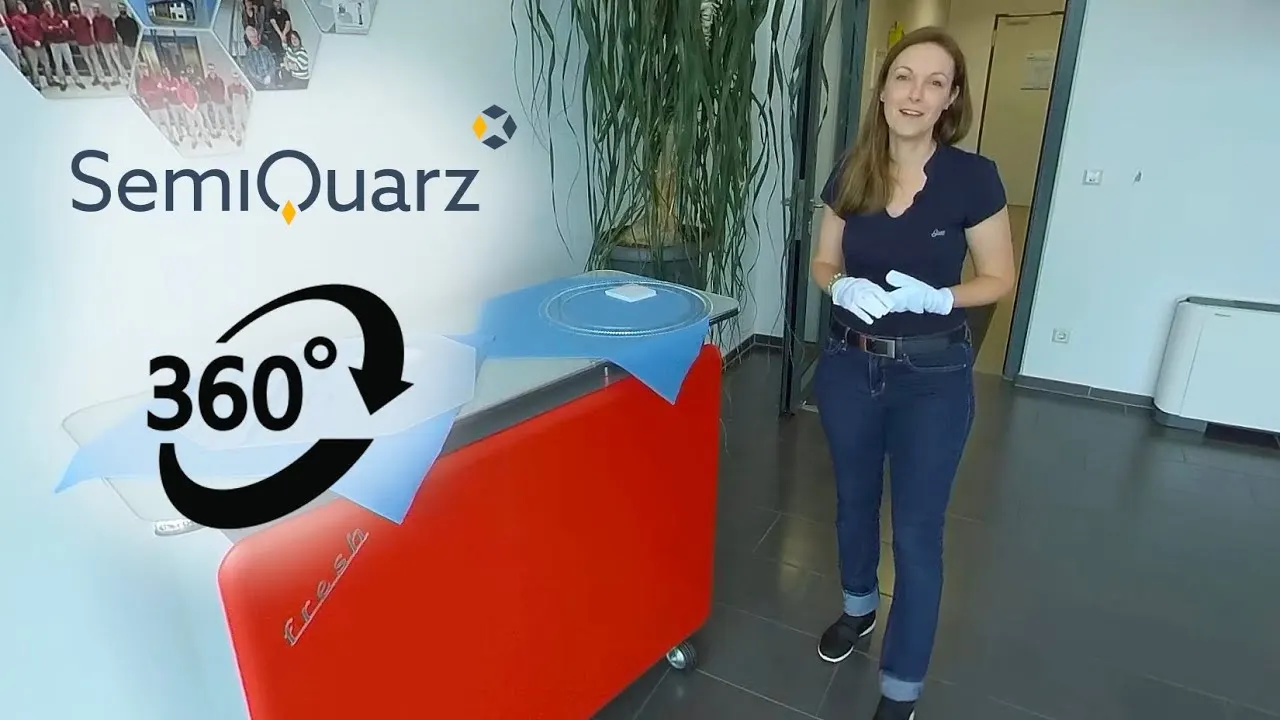
But SemiQuarz doesn’t just offer interesting careers. It also has modern workplaces and a great team. How can people get to know that? Ideally, with a visit on site. But because that takes a lot of effort and isn’t practical for a first introduction, SemiQuarz commissioned four 360° videos. In them, the company introduces itself, and apprentices, skilled workers, and career changers present their work in interviews.
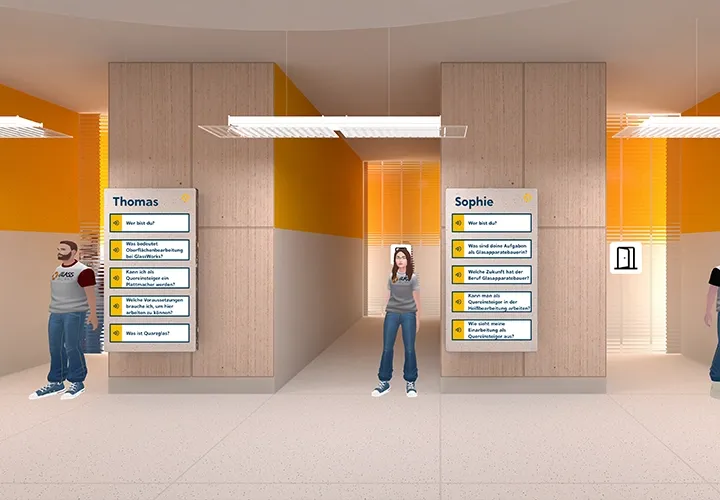
What does the Virtual Reality 360° app achieve?
“The VR headsets make it easier for us to connect with young people. As a result, we have many more concrete conversations than before,” Büsche reports. “In addition, prospective applicants engage with our company very intensively in a short time, which lets us have much more specific conversations.”
In practice, however, it also turned out that the application needs to be used differently in different situations. At trade shows and information stands, the 360° videos are ideal, because visitors don’t have to deal with the app’s controls and get a good impression of the company and its careers in just a few minutes. That is enough to spark interest in the company and the trade.
The job simulators, on the other hand, work well in situations where there is more time with the prospective applicants. Anyone seriously interested in an apprenticeship at SemiQuarz or in switching jobs to the company can prove their talent, which doubles as a small first aptitude test. This is also where the multiplayer function comes into its own, because SemiQuarz specialists can join in. They don’t have to leave the plant. They simply put on a VR headset and meet the prospective applicants, who may be 800 kilometers (about 500 miles) away, in the virtual job simulator. That way, they can talk about the job in confidence, “work together a little,” and get a sense of the personal chemistry.