
Which processes are suitable for VR training and which are not?
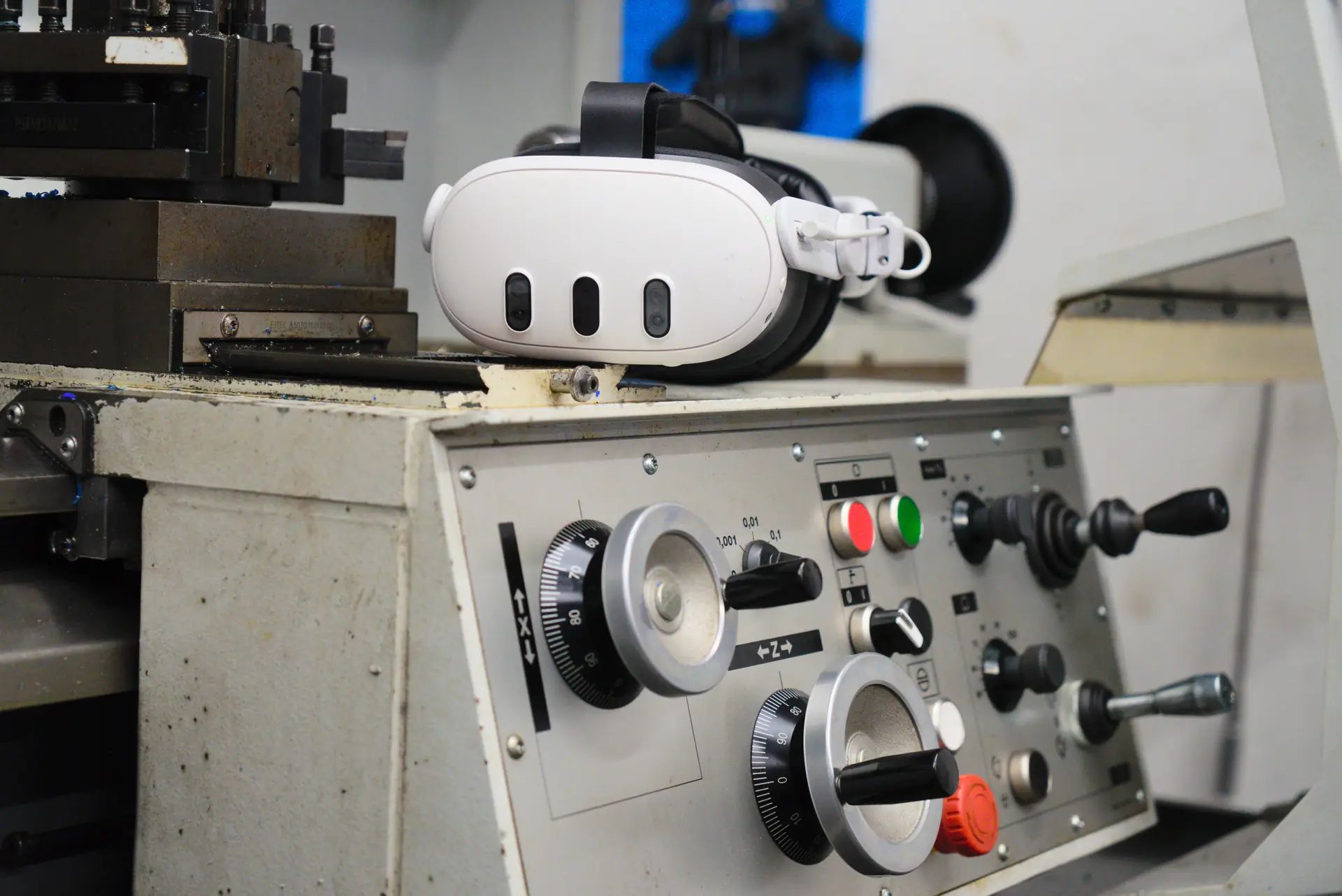
Training with a VR headset pays off for processes that are dangerous, expensive or rare in real life, and for equipment that can’t be shut down for training. It pays off especially when many employees need regular training. For purely factual knowledge and for manual tasks that depend on a fine sense of touch, there are better tools.
We also advise clients against virtual reality when it isn’t a good fit. A training program that nobody uses doesn’t help you or us. These are the questions we ask in our first conversation.
Nine questions to help you decide
| Question | If yes |
|---|---|
| Is the process dangerous in real life? | speaks for VR |
| Is practicing in real life expensive because material is used up or equipment is shut down? | speaks for VR |
| Does the situation occur rarely but require a confident response when it does? | speaks for VR |
| Do participants or trainers have to travel for the training? | speaks for VR |
| Do many employees need regular training? | speaks for VR |
| Are the training sessions or tests repetitive, for example because of regular staff turnover? | speaks for VR |
| Is it about manual tasks and sequences rather than facts? | speaks for VR |
| Does the process change every few months? | speaks against VR |
| Does it depend on a fine sense of touch? | speaks against VR, or for additional hardware |
What VR training is suitable for
Dangerous situations
If you do something wrong in VR, you immediately see what happens: the shelf tips over, the hand is injured. Nobody was in danger, but the experience sticks. In the job simulator “Startklar”, apprentices experience the effects of alcohol in the workplace. You can’t practice that in real life.
Expensive equipment and expensive material
An X-ray inspection system from Waygate Technologies weighs ten metric tons. For training, either the system or the participant has to travel. In VR, it is available anywhere. The same applies to material: workpieces for welding or dismantling are available virtually as often as you like.
Rare cases that require a confident response
Pilots practice every maneuver in the simulator until they master it, especially the ones that will hopefully never happen. Malfunctions, emergencies and exceptions can be triggered in VR as often as needed.
Processes with a fixed sequence
At Medtronic, doctors practice a heart procedure. At Aurubis, trainees take samples at the furnace. In both cases, it is about performing manual tasks in the right order. Routine comes from doing, not from watching.
Many employees who need regular training
A VR training program is developed once and can then be run as often as needed. The more employees use it, the less each session costs. This applies especially to safety instructions that have to be repeated every year, and to companies with several locations: the headsets travel, not the participants and not the trainers.
Recurring training and tests
Where staff change regularly, onboarding starts from scratch again and again. That is tiring for trainers, and quality varies with how they feel on the day. The headset explains things just as thoroughly the hundredth time as the first. Tests are the same for everyone, and the results can be documented. Your trainers have time for the questions only they can answer.
What VR training is less suitable for
Purely factual knowledge
Regulations, key figures and terms are learned faster with a text, a video or an e-learning course. VR is strongest when participants do something. Often the right answer is a mix: theory in e-learning, practice in the headset.
A fine sense of touch
Many things can be made tangible without additional hardware because the brain fills in what it sees and hears. That has limits. Anyone who has to learn the exact pressure point of a joystick, for example when operating a crane, needs the real control unit or special hardware.
Content that changes constantly
Changing a VR application takes more effort than replacing a slide. If a process changes every few months, the training should be built so that texts and steps can be adjusted without programming. We clarify this before we send a quote.
Very long sessions
People without VR experience get tired after 20 to 30 minutes. A two-hour process therefore doesn’t belong in one session but in several sections of no more than 20 minutes each, with breaks.
Showing places instead of practicing processes
If new employees need to get to know the plant without operating anything, a 360° video is often enough. It is ready faster and costs less.
Which type of project fits?
| Project type | Duration | Typical example |
|---|---|---|
| 360° video | 2 to 6 weeks | Tour of the plant for new employees |
| VR built from prepared modules | 6 to 12 weeks | A single safety instruction, a short process with a few steps |
| Interactive VR simulation | 2 to 4 months | Operating a machine, including error scenarios and a final test |
| Complex simulation | from 3 months | Surgical training, a complete production process |
Large projects start small. Interactive and complex simulations almost always start with a prototype. After that, the application grows step by step, over months or years. What each type of project costs is covered in the article How much does VR development cost?
Our advice: start with one process
Pick the process where the most goes wrong today or that is the most expensive to train. A first training program with this one process shows how your employees handle it. After that, the application grows step by step.
Conclusion
Virtual reality doesn’t replace every kind of training. It is the right tool when practicing in real life is too dangerous, too expensive or too rarely possible. If you’re not sure, describe the process to us. We will tell you honestly whether VR is a good fit.