
What do I need to provide to the development team?
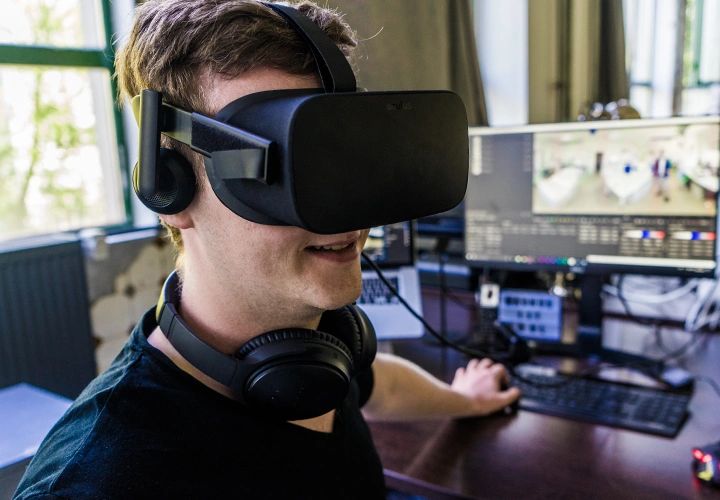
You provide the development team with two things: a clear concept with goals and requirements, and the content, such as CAD data, your corporate design guidelines and a script. Every VR project is different, but these items are needed for every development.
When you commission virtual reality development, you need to provide the development team with a few things. The team will ask for exactly what it needs on a case-by-case basis. But if you want to be well prepared, we have collected the key items that every project requires. They fall into two areas:
1. Concept and goals
The more thoroughly and clearly you work out the points in this area, the more likely it is that development will go smoothly and quickly, with few feedback rounds. Good preparation also helps ensure that the VR application achieves the results you want. These points are often relevant for calculating the quote, too.
- Goal: What do you want to achieve with the VR app? What is the primary goal? Write a memorable guiding statement that everyone involved can easily remember and always use as a reference point.
- Acceptance criteria: These usually follow from the goals. But it doesn’t hurt to spell them out clearly once more.
- Technical requirements and infrastructure: On what hardware and in what environment will the app be used? Will it process sensitive data or information that requires a specific level of data protection?
- User guidance requirements: Are the users experienced with VR or beginners? Will the app be used for a few minutes, or for 20 minutes or more? Accessibility?
- Schedule, responsibilities and to-dos: When can the project start? Who delivers what, and by when? When does the project need to be finished? Who is responsible for what?
For small and medium-sized projects, these details can be settled in a meeting or video call. For larger projects that will be used over the long term, the planning phase should be correspondingly thorough. An ideation workshop can be the right way to lay this important groundwork.
2. Content and materials
- Reference material: If products will appear in the VR app, CAD or STEP files help. If no 3D models are available, product photos, videos or written descriptions can be a good basis. The more, the better.
- Corporate design: Your company’s corporate identity rules, such as the style guide, fonts and logos.
- Content description: Write a script, similar to one for a film, that explains what happens in the app. For example: “1) I put on the VR headset. I see a menu for choosing an avatar, one male and one female. 2) I choose the female avatar by pressing the button with my hand. 3) Now the next scene loads: I find myself in a workshop. In front of me is a workbench, …”
This short overview is meant to help you move quickly into the planning and development phase. These points apply to every VR project. The development team will ask about anything else.