
Can VR be addictive?
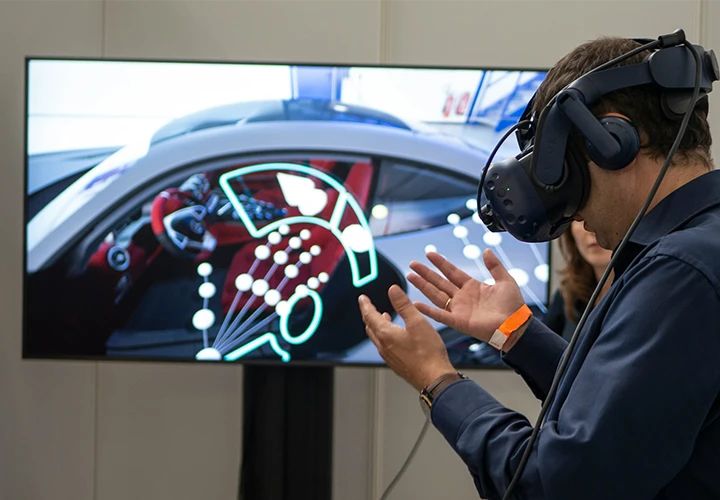
Yes, but the risk comes less from the VR headset than from the content. Virtual reality (VR) opens up impressive ways to become completely absorbed in digital worlds. Whether VR can be addictive, however, has less to do with the immersion the headsets create than with the content itself, such as games.
Is VR really more addictive than other media?
So far, the evidence shows that the addictive effect in VR comes primarily from the games played on the devices. A survey of 754 VR users found compulsive use about as often as with video games or social networks (Barreda-Ángeles and Hartmann 2022). Immersion does play a role, however: according to the study, people who strongly identify with their own avatar in VR are more at risk. But the same is true of conventional games on a PC, smartphone or console.
Gaming addiction often develops when people spend long periods immersed in captivating game worlds to escape reality. This element of escape is the same in VR and in non-immersive games. Because conventional games are available in far greater numbers and variety and are technically easier to use, someone is much more likely to develop a gaming addiction on a PC or smartphone.
VR today: a form of gaming addiction
Right now, “VR addiction” is essentially gaming addiction as we know it from other platforms. Based on current knowledge, VR technology does not intensify this craving much more than conventional games do. Still, it is worth keeping an eye on how this develops. The underlying challenge is still the same, though: as described above, many people use these experiences to escape the real world. This behavior is not tied to VR as a medium but to game content that uses similar mechanisms (such as dark patterns) to hook users.
The future: VR’s growing importance
Even so, it is important to keep an eye on how VR headsets and VR offerings develop in the coming years. While VR is currently less common in private households, that could change over the next few decades. As devices improve and games and social networks in virtual reality evolve, VR could actually become more addictive than today’s non-immersive versions.
If new VR games and social platforms emerge that have an even stronger pull and draw users deeper into digital worlds, new risks could develop as well. Socially connected VR worlds in particular could become places where people lose themselves for long periods as immersive technology continues to improve.
Conclusion
Currently, the risk of VR addiction lies primarily in gaming addiction, which can occur in similar ways on smartphones or PCs. Still, it is wise to keep an eye on how VR offerings develop, since they could have an even greater potential for addiction in the future.
At VRtual X, we are committed to responsible use and are happy to advise you on how to use VR sensibly and without risk.